
Physical Description
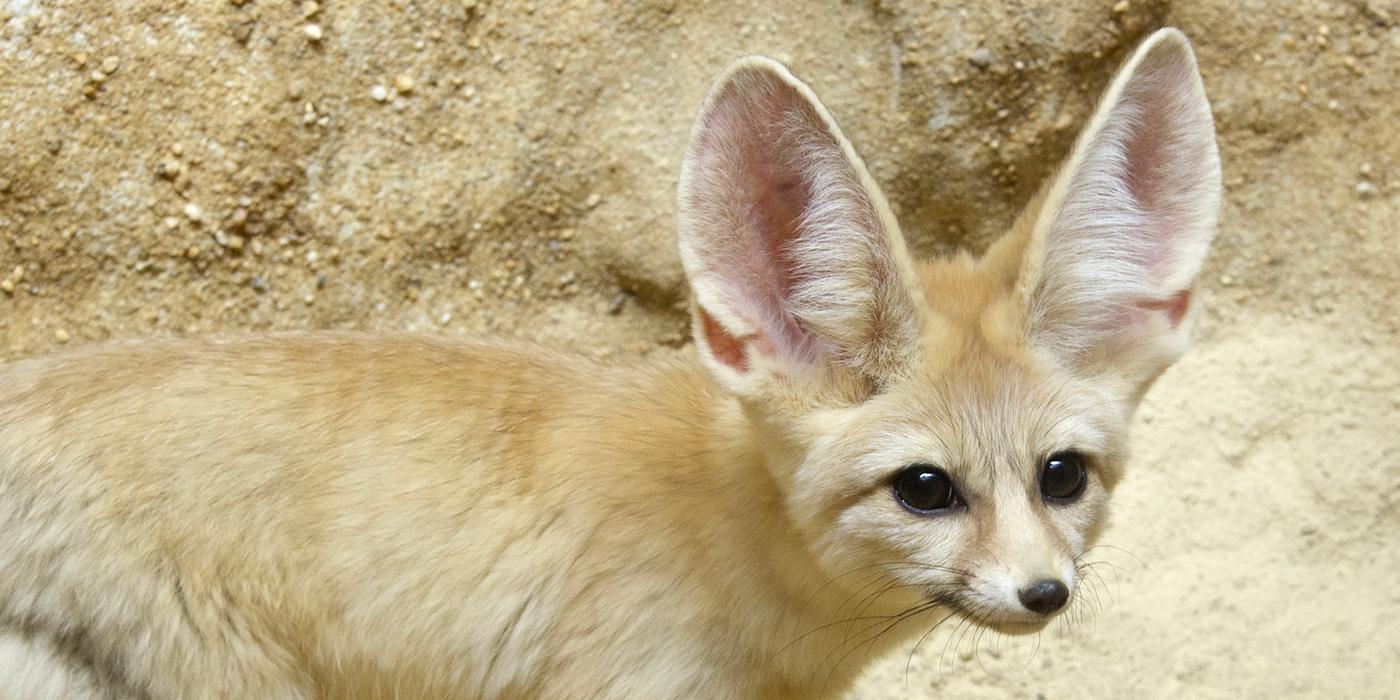
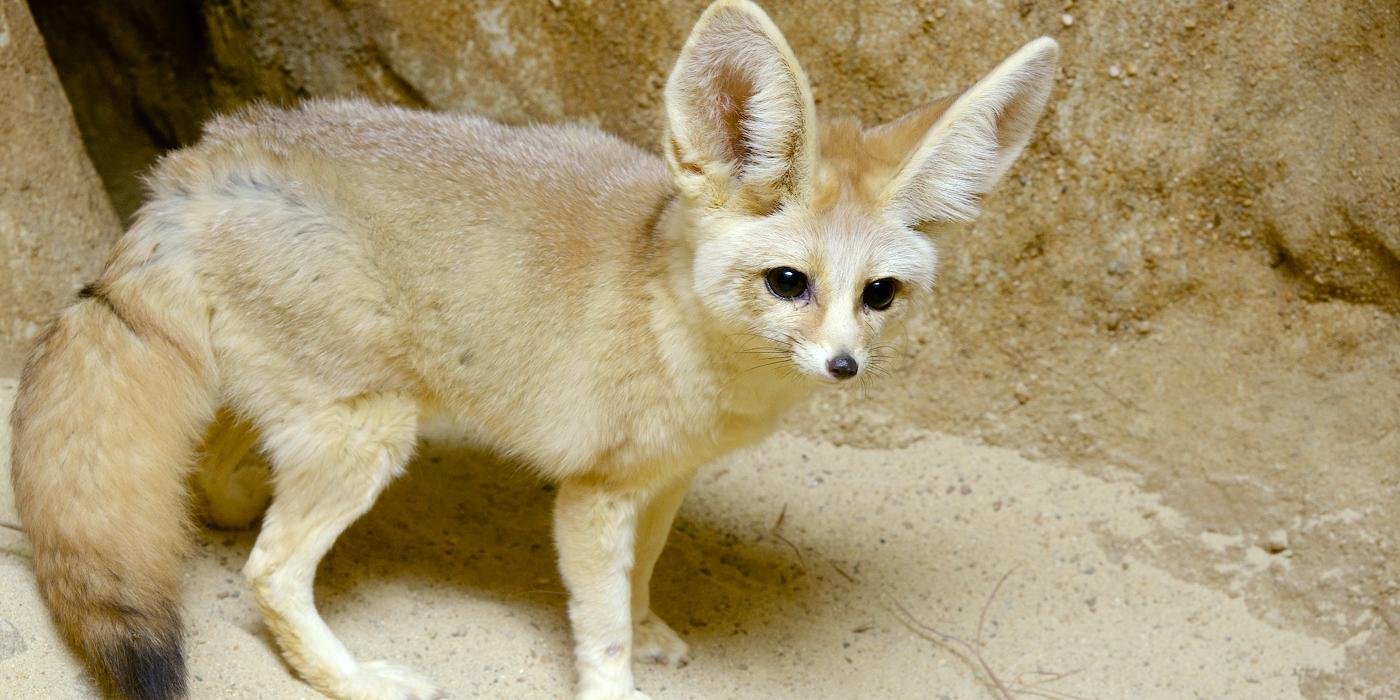
Their coats are long, soft, and thick and range in color from reddish cream to light fawn to almost white. Their undersides are pure white, and their tails are bushy with black tips.
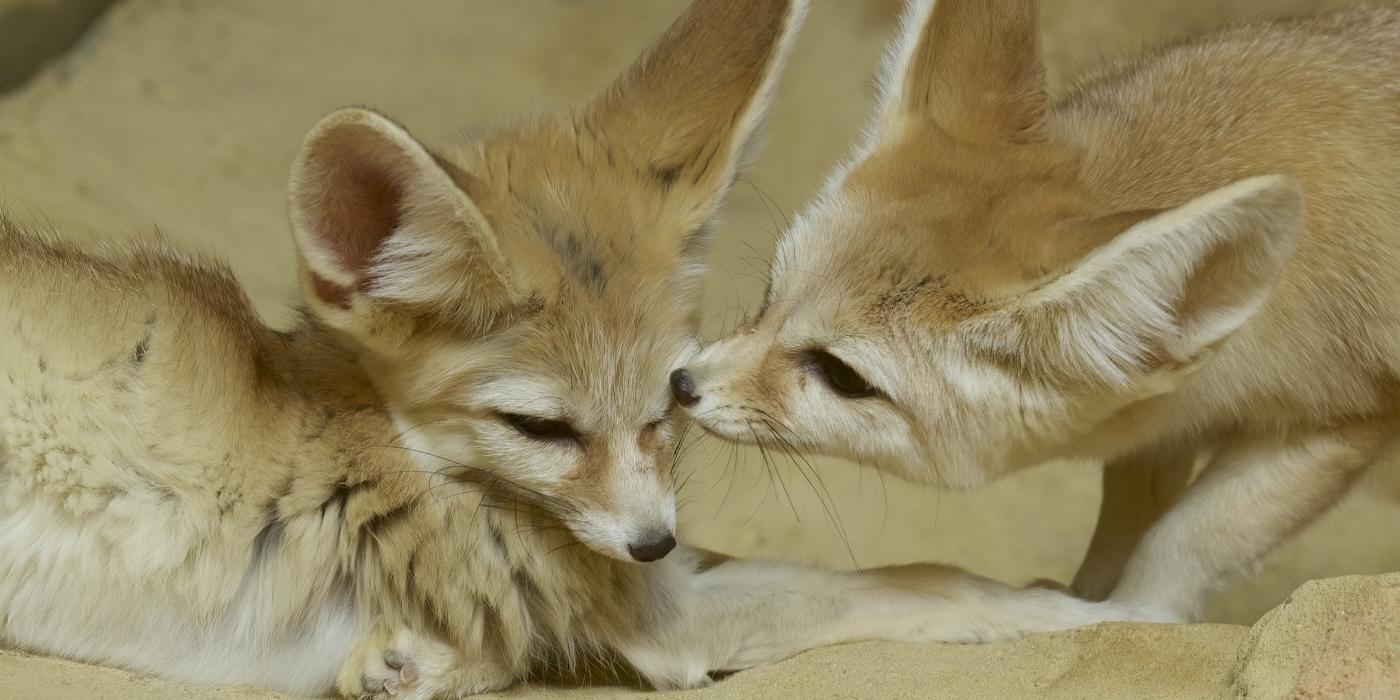
These foxes are adapted to life in the desert. They have the largest ears relative to their body size of any member of the canid family, which they use to dispel heat and track down prey underneath the sand. They are also the palest of all foxes, giving them excellent camouflage. Heavily furred paws provide traction when running in the sand while also offering protection from the extreme heat of the terrain. Fennec foxes are also capable of going for long periods without consuming water; they are able to hydrate through the food they consume.
Size
The smallest of all canids, fennec foxes are 14 to 16 inches (35.6 to 40.6 centimeters) long, with an additional 7 to 12 inches (18 to 30 centimeters) of tail. They usually weigh between 2 and 3 pounds (0.9 to 1.4 kilograms). Perhaps their most notable characteristic is their ears, which can grow to between 4 to 6 inches (10.2 to 15.2 centimeters) in length.
Native Habitat
Fennec foxes live in North Africa, throughout the Sahara Desert and east to Sinai and Arabia. They prefer sandy deserts and arid regions with desert grasses or scrub vegetation.
Lifespan
Fennec foxes may live up to 11 years in human care.
Communication
Fennec foxes are territorial, and mark their terrain with urine and feces. Vocalizations among these foxes are common, and can manifest as whimpers, barks, shrieks, squeaks, growls, howls or chatters.
Food/Eating Habits
In the wild, fennec foxes eat insects—particularly grasshoppers and locusts—as well as small rodents, lizards, birds and their eggs. They will also consume roots, fruits and leaves, which help them to hydrate. Hunting occurs at night and alone; fennec foxes use their abnormally large ears to listen for prey underneath the sand, and once located will dig with all four feet to expose their meal. They can catch and kill prey larger than themselves; there have been documented cases of fennec foxes taking down fully grown rabbits.
At the Smithsonian's National Zoo, fennec foxes eat meat, assorted fruits and vegetables, mice and insects.
Sleep Habits
Nocturnal animals, fennec foxes will hide out in burrows during daylight to avoid the hottest portion of the day. They create the burrows themselves, often digging out a series of tunnels that can reach up to 32 feet (10 meters) in length. It is not uncommon for these dens to have multiple entrances and exits to provide a safe escape in the event of an outside threat.
Social Structure
Monogamous animals, fennec foxes can live in family groups of up to ten individuals. There have been some instances of multiple family groups sharing a complex den.
Reproduction and Development
Fennec foxes typically give birth to one litter of pups per year, with between two and five young in a litter. During the four to six weeks of rutting season, males can become extremely aggressive and will mark their territory with urine. Females will go into estrus for one to two days, and following copulation the gestation period lasts between 50 and 53 days. Males defend females before and during birth, and will provide food to the female until the pups are about 4 weeks old. Young are born fully furred but blind; their eyes open after eight to 11 days, and they are able to walk at about 2 weeks. Pups usually nurse for their first 10 weeks of life and become mature at 9 to 11 months.
Conservation Efforts
Fennec foxes are legally protected in Morocco, Algeria, Tunisia and Egypt.
The primary threat to fennec foxes is human interference. They are commonly trapped for exhibition or sale to tourists, and there have been limited instances of human settlements encroaching on fennec populations. Native populations in the Sahara region also hunt fennec foxes.
Help this Species
Practice ecotourism by being an advocate for the environment when you’re on vacation. During your travels, support, visit or volunteer with organizations that protect wildlife. Shop smart too! Avoid buying products made from animals, which could support poaching and the illegal wildlife trade.
Share the story of this animal with others. Simply raising awareness about this species can contribute to its overall protection.
Meet the Animals
Two fennec foxes live at Small Mammal House: a female named Sahara and a male named Desi.
Smithsonian's National Zoo and Conservation Biology Institute. (n.d.). Fennec fox. Retrieved October 24, 2026, from https://www.nationalzoo.si.edu/animals/fennec-fox
Animal News

The Smithsonian National Zoo's Cheetah Cub Cam Returns — With Five Adorable Reasons to Tune In ›
Four generations of one cheetah family now live at the Zoo's off-campus research facility. Meet the newest members.

11 Fascinating Facts About North American Porcupines ›
There are plenty of surprises to discover about these prickly creatures.

Watch Meerkats Explore Jack-o'-Lanterns and Cauldrons ›
Seven meerkats got a Halloween-themed surprise from their keepers. See how they dug in.