
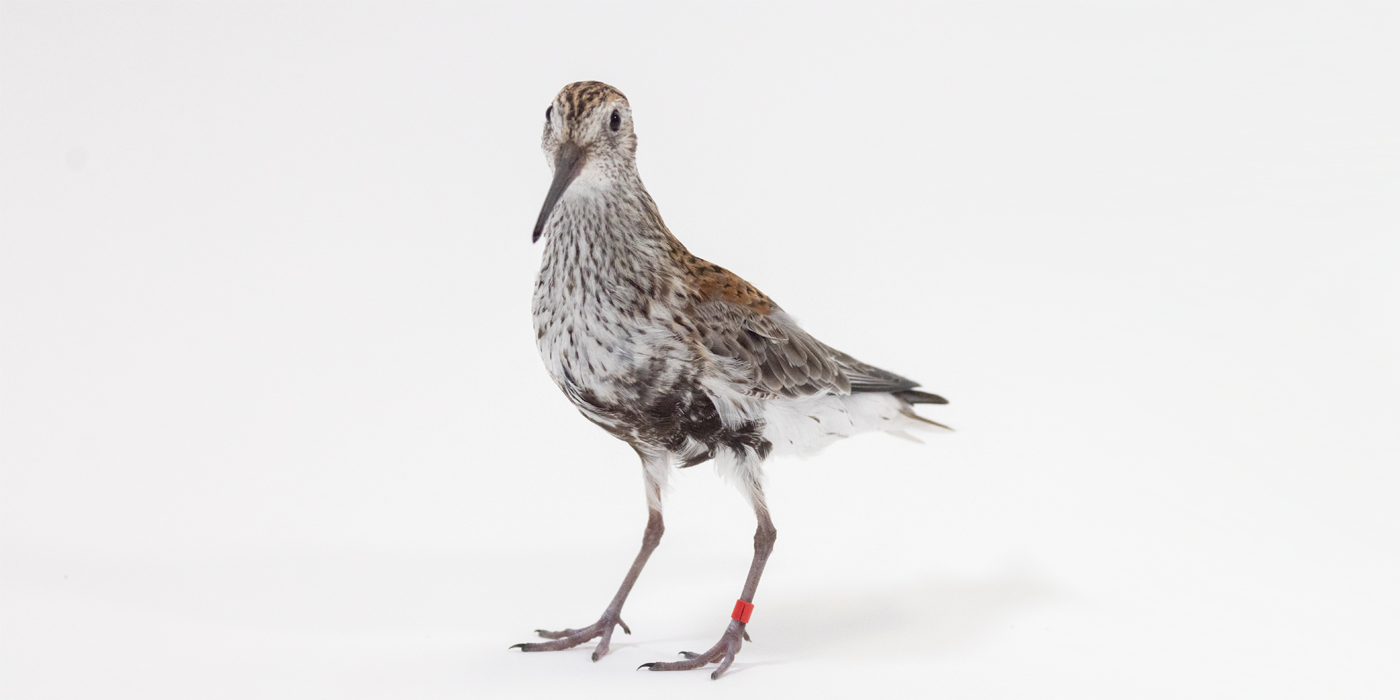

Physical Description
Size
Native Habitat
During the breeding season, they live in coastal tundra areas. In the winter, they live along mudflats, estuaries, marshes and coastlines.
Lifespan
Communication
Food/Eating Habits
Dunlins feed in wet marshes and mudflats and eat mainly invertebrates, including insects, snails, worms and crustaceans. They use their wide, slightly downturned beak to hunt for food in the mud.
Sleep Habits
Social Structure
Reproduction and Development
Dunlin nests are shallow bowls scraped into the sand or mud in the ground by the male. Nests are often positioned at the top of tussocks, or patches of tall grass. The female selects the nest scrape to use, and lays four olive to brown-colored speckled eggs. Both parents incubate the eggs. The babies leaves the nest soon after hatching, and their father takes care of them until they are ready to be on their own.
Conservation Efforts
Help this Species
Reduce, reuse and recycle — in that order! Cut back on single-use goods, and find creative ways to reuse products at the end of their life cycle. Choose recycling over trash when possible.
Organize or attend a stream, river, lake or other waterway cleanup in your area to preserve aquatic habitats for local species.
Avoid single-use plastics, such as plastic bottles, bags and utensils. Choosing reusable options instead can help reduce plastic pollution.
Protect local waterways by using fewer pesticides when caring for your garden or lawn. Using fertilizers sparingly, keeping storm drains free of litter and picking up after your pet can also improve watershed health.
Smithsonian's National Zoo and Conservation Biology Institute. (n.d.). Dunlin. Retrieved August 22, 2026, from https://www.nationalzoo.si.edu/animals/dunlin
Animal News

Three Adorable Red Panda Cubs Born This Summer at the Zoo’s Front Royal Campus ›
“The cubs are really just balls of fur that eat and sleep right now,” said Jessica Kordell, assistant curator of carnivores.

How Smithsonian Science Is Helping the Scimitar-Horned Oryx Recover — and Thrive ›
Once pushed to the brink of extinction, the oryx is becoming one of conservation's most inspirational stories.

11 Fascinating Facts About the Hellbender, North America’s Largest Amphibian ›
Hiding in Appalachia’s cool mountain streams is one impressively large salamander.