

Physical Description
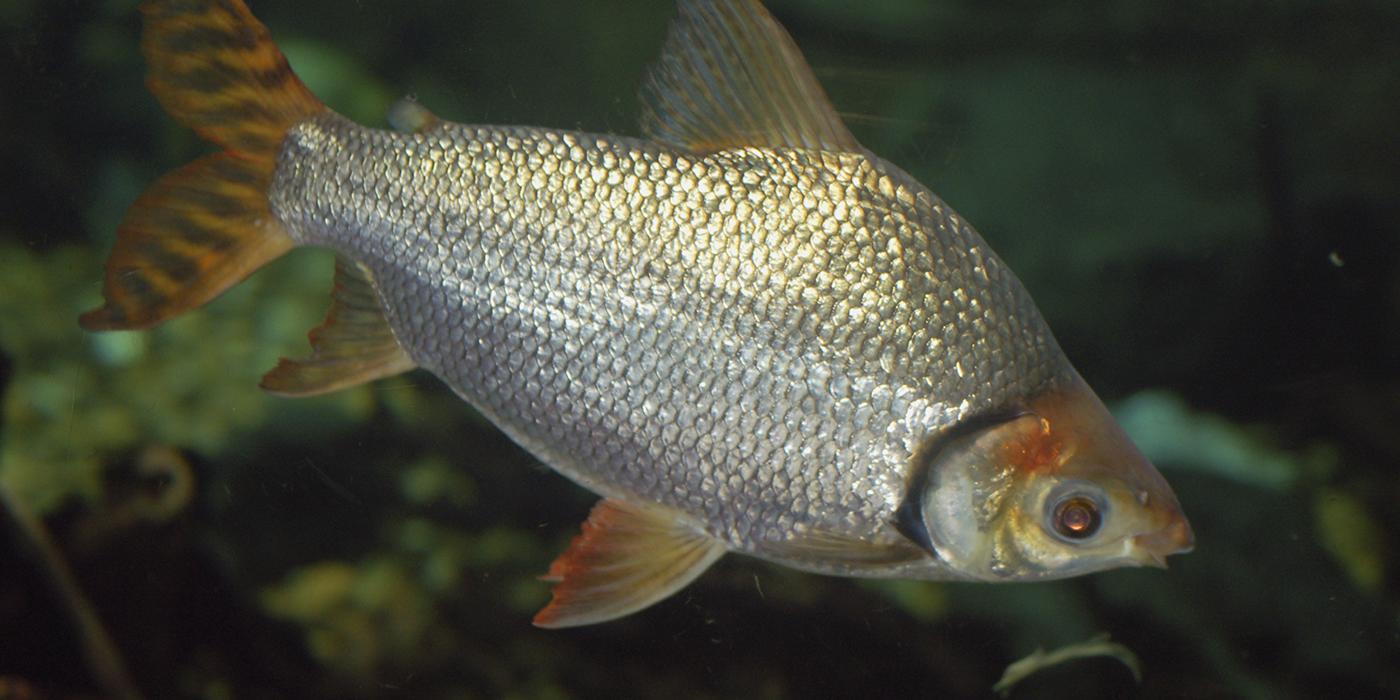
They have a flattened silver body with occasional black spots along their sides and toward their back fin. The fin on the stomach is a bright reddish orange, while anal and caudal fins are marked with bold alternating black and orange stripes. The dorsal fin is darker, standing tall with some orange markings.
Size
Flagtail characins grow to 13.8 inches (35 centimeters) in length.
Native Habitat
Flagtail characin can be found in central and western Amazonian tributary rivers, as well as the Amazon River basin. They prefer freshwater and most commonly occupy the bottom layer of the body of water they live in. They take part in the seasonal migration of the Rio Madeira basin, which corresponds with annual flooding. As the surrounding forests become flooded, characins enter the previously dry area to find food. Flagtail characins prefer water temperatures between 71.6 and 78.8 degrees Fahrenheit (22 to 26 degrees Celsius). This species is considered potamodromous, meaning that they migrate only within freshwater rivers and streams.
Food/Eating Habits
Flagtail characins are a microphagous species, one whose diet consists primarily of detritus and other fine material rich in microorganisms which are found in the substrate. At the Zoo, they eat a gel diet.
Reproduction and Development
An oviparous, or egg-laying, species, flagtail characin migrate upriver to spawn.
Conservation Efforts
Flagtail characins have not yet been assessed by the International Union for Conservation of Nature. Their status in the wild is unknown. However, they are considered an important part of commercial fisheries in their native region.
Help this Species
Reduce, reuse and recycle — in that order! Cut back on single-use goods, and find creative ways to reuse products at the end of their life cycle. Choose recycling over trash when possible.
Share the story of this animal with others. Simply raising awareness about this species can contribute to its overall protection.
Smithsonian's National Zoo and Conservation Biology Institute. (n.d.). Flagtail characin. Retrieved August 20, 2026, from https://www.nationalzoo.si.edu/index%2ephp/animals/flagtail-characin
Animal News

Three Adorable Red Panda Cubs Born This Summer at the Zoo’s Front Royal Campus ›
“The cubs are really just balls of fur that eat and sleep right now,” said Jessica Kordell, assistant curator of carnivores.

How Smithsonian Science Is Helping the Scimitar-Horned Oryx Recover — and Thrive ›
Once pushed to the brink of extinction, the oryx is becoming one of conservation's most inspirational stories.

11 Fascinating Facts About the Hellbender, North America’s Largest Amphibian ›
Hiding in Appalachia’s cool mountain streams is one impressively large salamander.