
Content Tagged as American Prairie Reserve
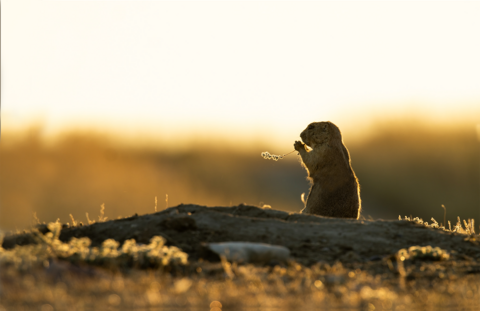
Predator Alerts Bring Together Prairie Dogs and Grassland Birds ›
Some birds listen in on prairie dog alarm calls to learn when predators are close, according to a new study from our grassland science team.
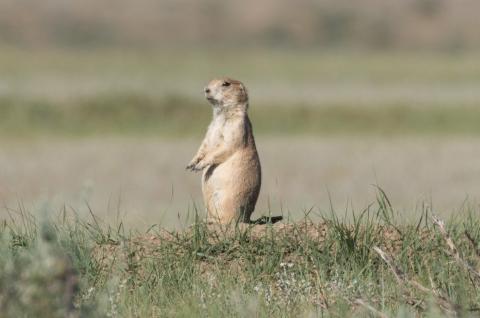
How Prairie Dogs and Grassland Birds Work Together for Survival ›
Prairie dogs play a critical role across the North American Great Plains, and researchers are learning every day just how much these industrious squirrels do for their neighbors.
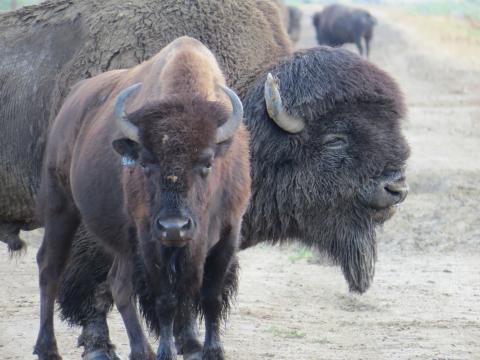
Why I’m Tracking Bison Herds Across the Prairie ›
Smithsonian ecologist Claire Bresnan encourages aspiring scientists to take a chance on themselves, and not succumb to "gloom and doom" in her Focus on the Future feature.
How to Protect and Restore Grasslands ›
Journey to Montana with Smithsonian scientists and Tribal communities as they protect and preserve American grasslands.
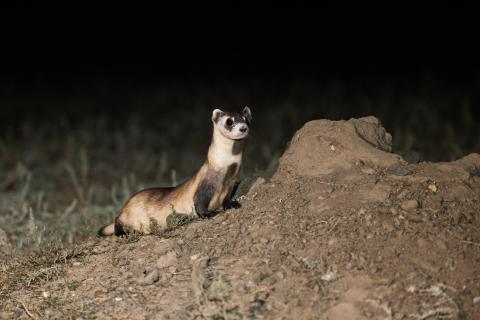
Innovative Technology Aims to Boost Black-Footed Ferret Recovery Efforts ›
Tiny tracking devices are being used by researchers to monitor the behavior and movements of black-footed ferrets that were reintroduced into the wild.
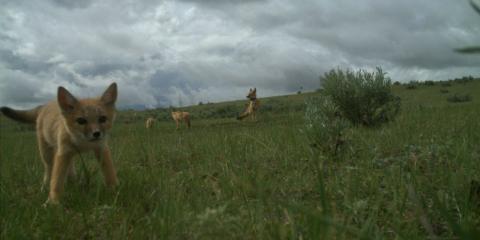
Lessons from the Swift Fox: Risk, Stress and Success ›
Does an animal's personality play a role on whether it will survive in the wild? Researchers are using a surprising clue to find out: poop.
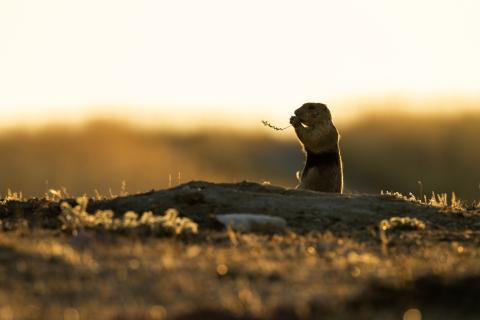
New Technologies Track Prairie Dogs and Map Their Burrows for the First Time ›
Specialized technologies offer a new perspective into the lives of endangered black-footed ferrets and their prairie dog prey.
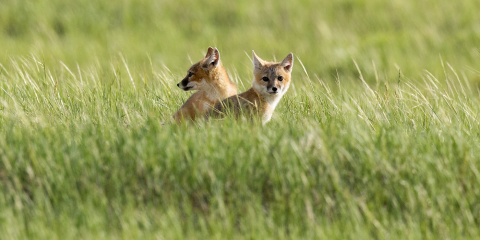
Tribes Successful with Swift Fox Reintroduction Program at Fort Belknap ›
The Fort Belknap Indian Community commemorated three years of its swift fox recovery program with the release of three swift foxes on Tribal lands, bringing the total to 103 recovered back to these prairie grasslands.
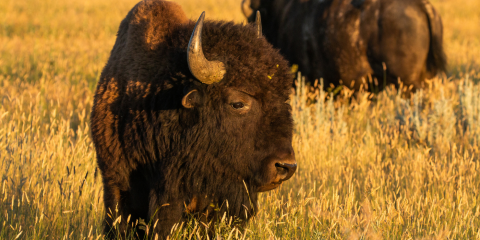
Landmark Study Demonstrates Cultural, Ecological and Economic Benefits of Tribal Bison Restoration ›
A study published in Frontiers in Ecology and Evolution found that widespread restoration of bison to Tribal lands throughout the Northern Great Plains can help restore the prairie ecosystem while improving the long-running issue of food insecurity and food sovereignty for Native Nations and may...
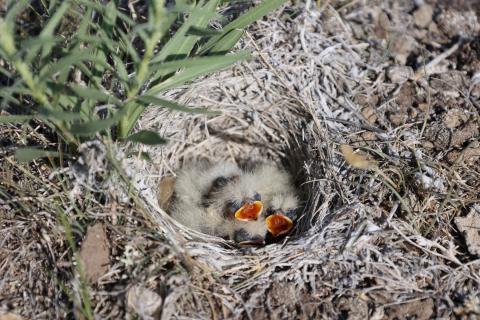
A Rare Look Inside the Nests of Declining Prairie Songbirds ›
Each spring, the Northern Great Plains erupts with life as migratory birds return to build nests and raise their young. Smithsonian researchers are studying these grassland birds that nets in areas inhabited by prairie dogs.
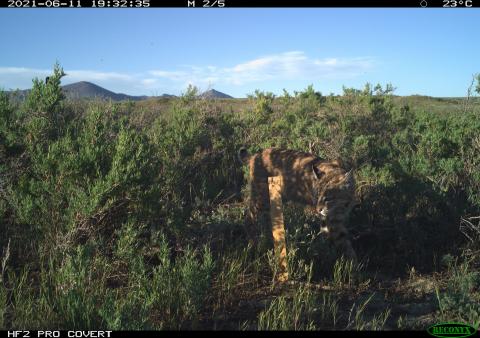
How I Study Elusive Prairie Bobcats ›
Find out how Smithsonian researchers are using camera traps to study bobcats on the Northern Great Plains.
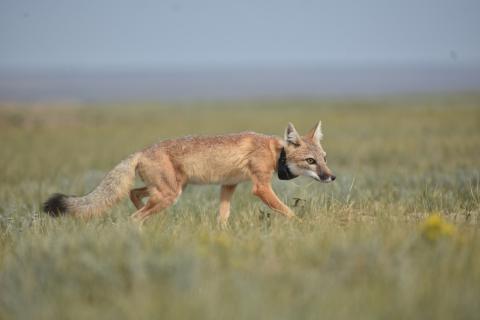
Learning About Swift Foxes from What They Leave Behind ›
Sometimes, science stinks — literally! In Montana, researchers are setting up “scat traps" to attract swift foxes, so they can learn from the droppings the foxes leave behind.
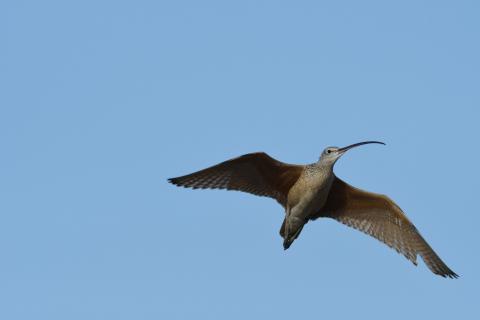
44-hour Flights: Tracking Curlews Across North America ›
Modern technology is helping unravel the mystery of how migratory birds achieve their amazing flights. Researchers are already finding that many birds fly farther, faster and higher than they thought.
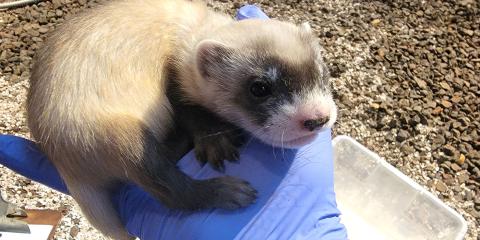
Public Invited To Name Black-Footed Ferret Kits at the Smithsonian Conservation Biology Institute ›
The Smithsonian’s National Zoo and Conservation Biology Institute invites the public to help name three black-footed ferret kits—one female and two males—born May 19 at the Smithsonian Conservation Biology Institute (SCBI) in Front Royal, Virginia. Voting for the names starts Tuesday, July 20, at 10...
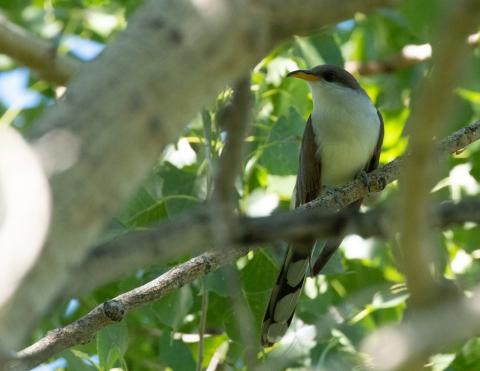
How Ecologists are Using Sound to Detect an Elusive Bird ›
Cuckoos are extremely secretive birds and difficult to spot. Researchers are developing a tool, using remote sound recorders and artificial intelligence, to help detect them.
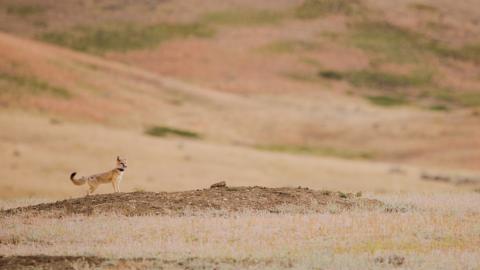
How Tribes and Conservation Partners are Bringing Swift Foxes Back to Their Historic Range ›
In the midst of the pandemic, as the story goes, a team set out to bring swift foxes back to a land they had disappeared from more than 50 years ago. Learn more in this update from landscape ecologist Hila Shamon.
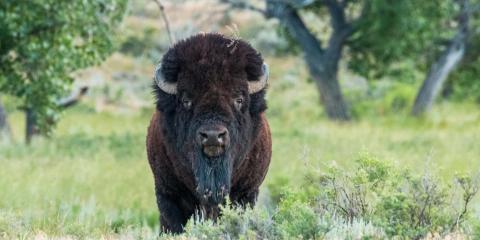
I Spent the Summer Studying a Herd of Bison, And Here’s What I Learned ›
Spending your days with a herd of bison is an idyllic way to pass a summer. I would know, because most of my days from May to August were spent observing the behaviors of a herd of about 300 bison in Montana.
Tribes Begin Five-Year Swift Fox Reintroduction at Fort Belknap ›
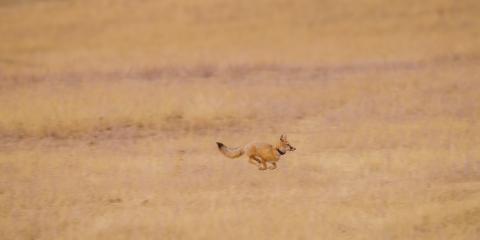
After an absence of more than 50 years, the swift fox has returned to the grasslands of the Fort Belknap Indian Reservation in Montana.

Bison and Lobsters: Neighbors Separated by 75 Million Years ›
Ecologist Andy Boyce discovered a lobster fossil near his field site in Montana, evidence that long ago this area of the Northern Great Plains was once the floor of a shallow sea.
Smithsonian’s National Zoo Welcomes Two New Bison ›
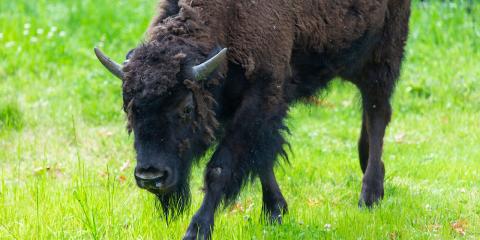
The Smithsonian’s National Zoo and Conservation Biology Institute has welcomed “Lucy” and “Gally,” two juvenile female American bison.
Ecologists Dig Prairie Dogs, And You Should Too ›
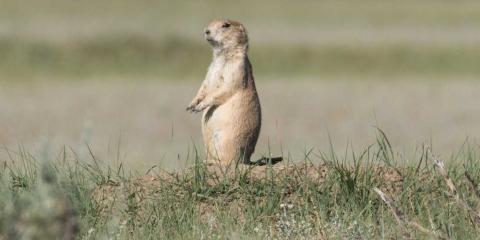
At their field site in north-central Montana, ecologist Andy Boyce and intern Andrew Dreelin are learning more about how black-tailed prairie dogs change the landscape and support the many species that call the prairie home.
Working Toward Swift Fox Reintroduction ›
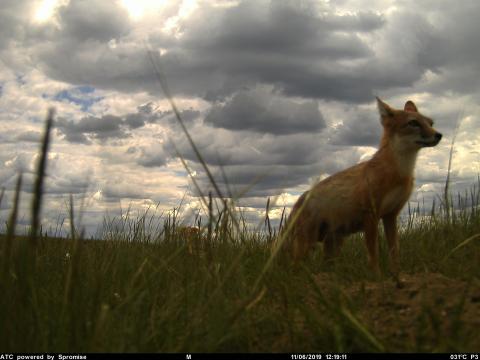
Landscape ecologist Hila Shamon lives and works in Montana, where she studies the prairie and its wildlife. Over the last year and a half, she has been working with Fort Belknap Indian Reservation and other collaborators to develop a swift fox reintroduction program.
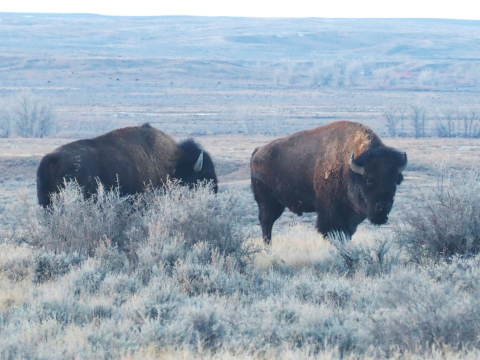
Fantastic Beasts of the Great Plains ›
Smithsonian ecologists worked with American Prairie Reserve staff to fit bison with GPS ear tags. Their movement study will help researchers understand how bison move and use the landscape at the Reserve in Montana.
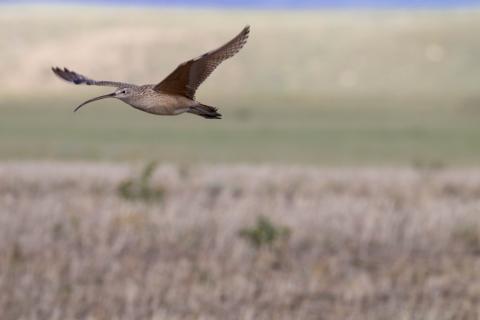
Hiding in Plain Sight: Tracking the Long-billed Curlew ›
Long-billed curlew are shorebirds that spend their summers breeding in the grasslands of Montana. Smithsonian ecologists are equipping them with GPS trackers to learn more about their movements.
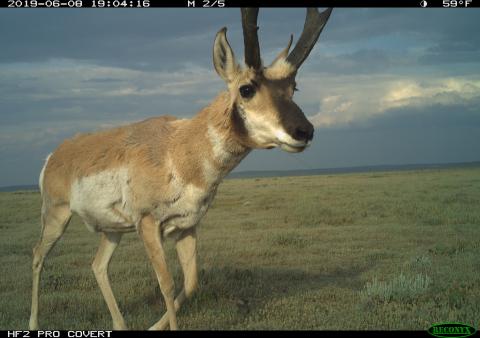
Studying Animals in Extreme Landscapes ›
How can you begin to study something as vast and diverse as the American prairie? Find out in the latest blog from landscape ecologist Hila Shamon who is stationed at American Prairie Reserve in Montana.