
Physical Description
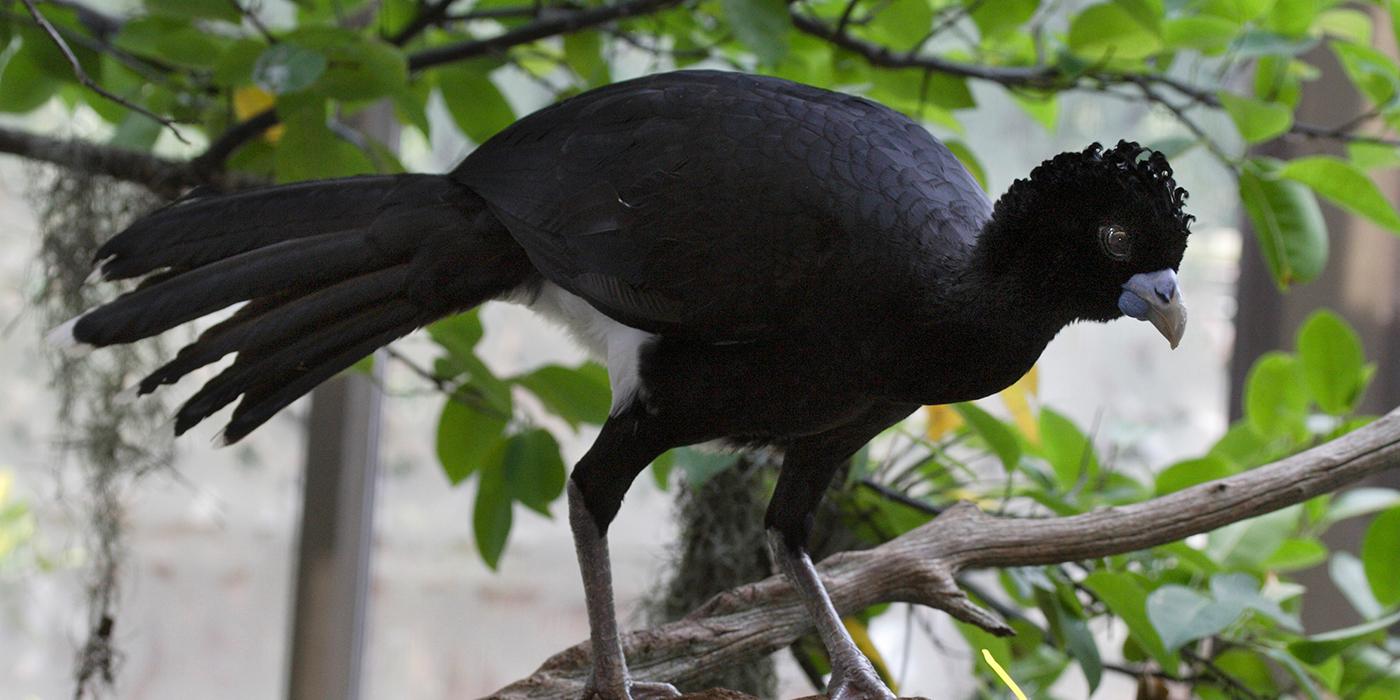
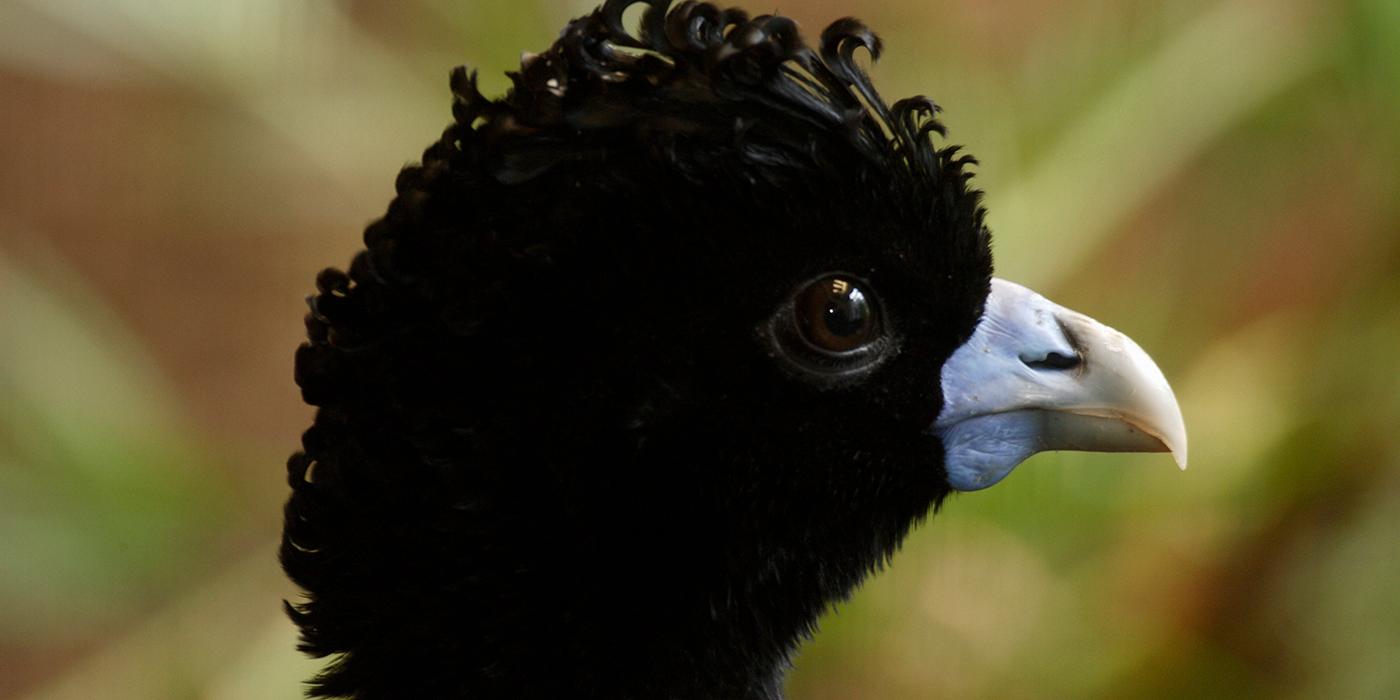
The blue-billed curassow is black with white feathers on its rear underbelly and at the tip of its tail. It has a light-gray bill with fleshy blue cere (the waxy structures at the base of its bill). The currasow has a hanging wattle, curled black crest feathers and pinkish legs.
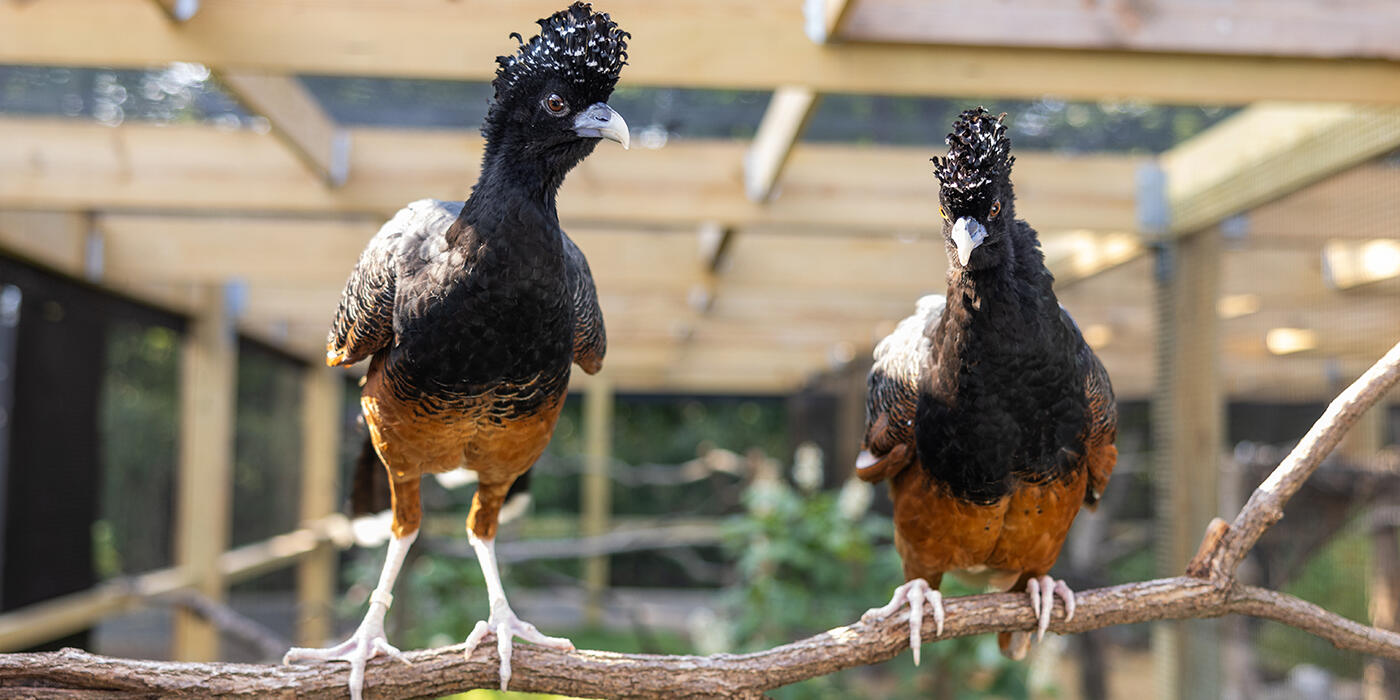
Females are black with black-and-white crest feathers and fine white barring on their wings and tail. They have a ruddy lower belly and a bluish base to their bill. Only the female grows a knob on the bill.
Size
The blue-billed curassow is a large bird, standing 32-36 inches (83-93 centimeters) tall. Males are usually larger than females.
Native Habitat
Blue-billed curassows historically occurred throughout northern Colombia. Today, the entire wild population occurs in just a few small remnant areas of tropical lowland forest.
Food/Eating Habits
They eats fruits, worms, insects, snails, crayfish and sometimes carrion. They are primarily terrestrial birds, feeding on the forest floor.
Reproduction and Development
In the wild, blue-billed curassows breed once a year during the dry season from mid-December to early March. They nest in trees with dense foliage for protection against predators. Females lay two to three white eggs, slightly spotted with pale brown. They incubate the eggs for about 32 days.
Typically, one or two young hatch successfully. Chicks hatch full-feathered and leave the nest very quickly, though they remain close to their parents for some time. They reach sexual maturity at 3 years old.
Conservation Efforts
The main threats facing the blue-billed curassow are habitat loss and fragmentation. One major source of habitat loss is the widespread spraying of nonspecific herbicides by the Colombian government to combat illegal drug crops grown in the area. Other threats include hunting and wild collection.
Help this Species
Share the story of this animal with others. Simply raising awareness about this species can contribute to its overall protection.
Are you a student? Did you love what you learned about this animal? Make it the topic of your next school project, or start a conservation club at your school. You'll learn even more and share the importance of saving species with classmates and teachers, too.
Less is more. Cut down on the demand for resources by consuming less. Buy only what you need, and look for pre-owned or repurposed items before purchasing something brand new.
Smithsonian's National Zoo and Conservation Biology Institute. (n.d.). Blue-billed curassow. Retrieved September 5, 2026, from https://www.nationalzoo.si.edu/index%2Ephp/animals/blue-billed-curassow
Animal News

8 Reasons Why Zoo Staff Think the Chacoan Peccary Might Be Your New Favorite Animal ›
Two animal care experts share why this new species might become your next obsession.

Look Back At Linh Mai’s Most Memorable Moments As She Turns 7 Months Old ›
Seven months ago, the world fell in love with a little Asian elephant named Linh Mai. As she turns 7 months old, we're taking a look back at her most memorable moments.

Three Adorable Red Panda Cubs Born This Summer at the Zoo’s Front Royal Campus ›
“The cubs are really just balls of fur that eat and sleep right now,” said Jessica Kordell, assistant curator of carnivores.