

Physical Description
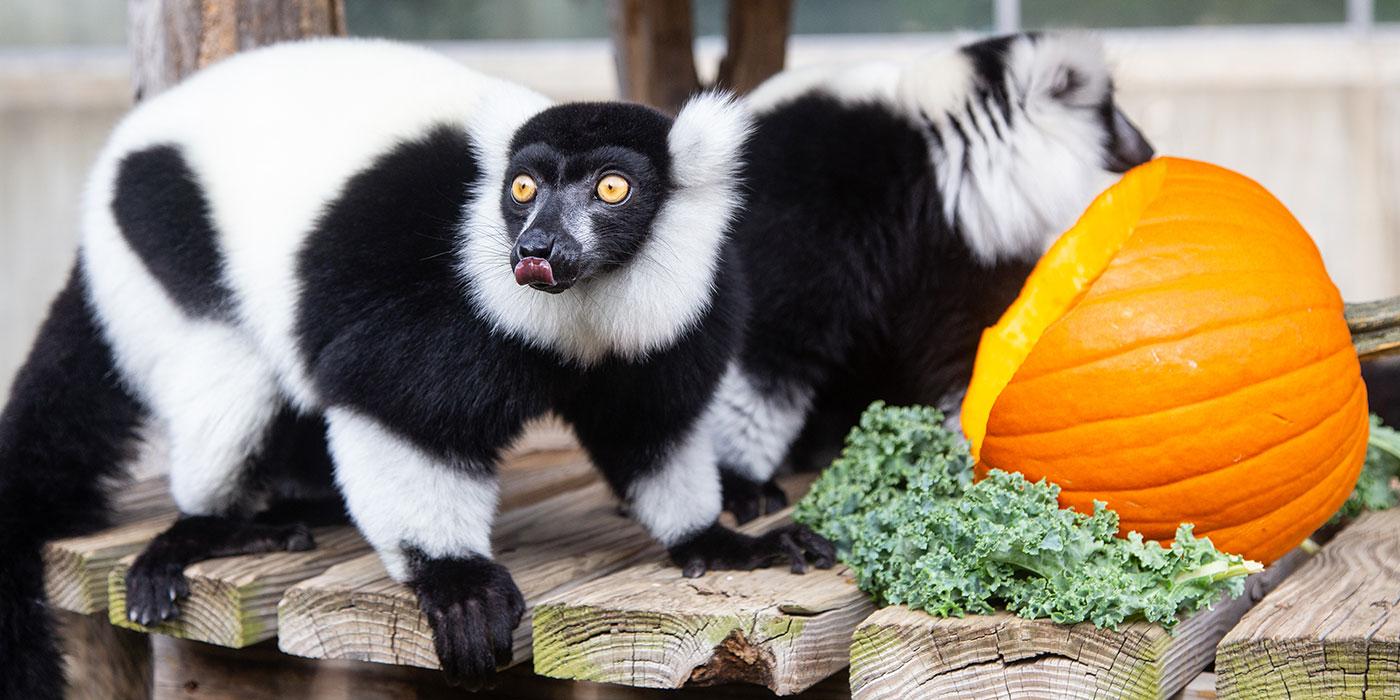
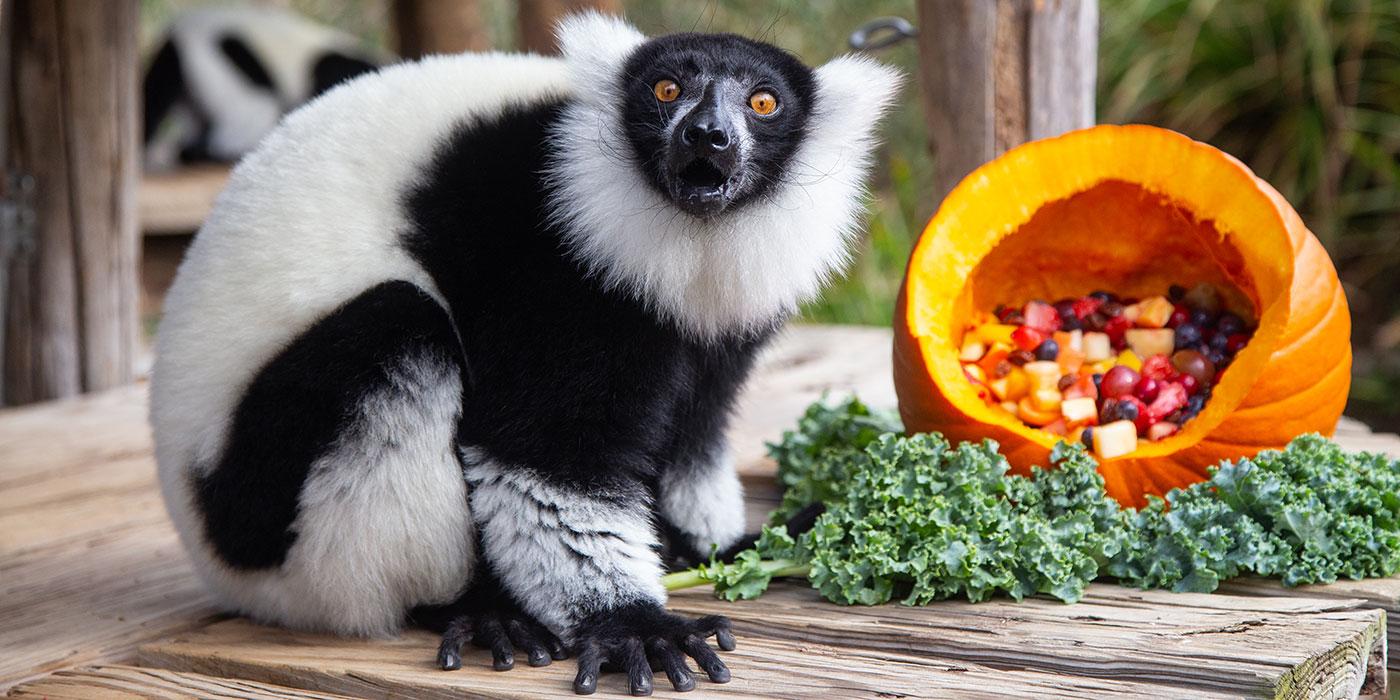
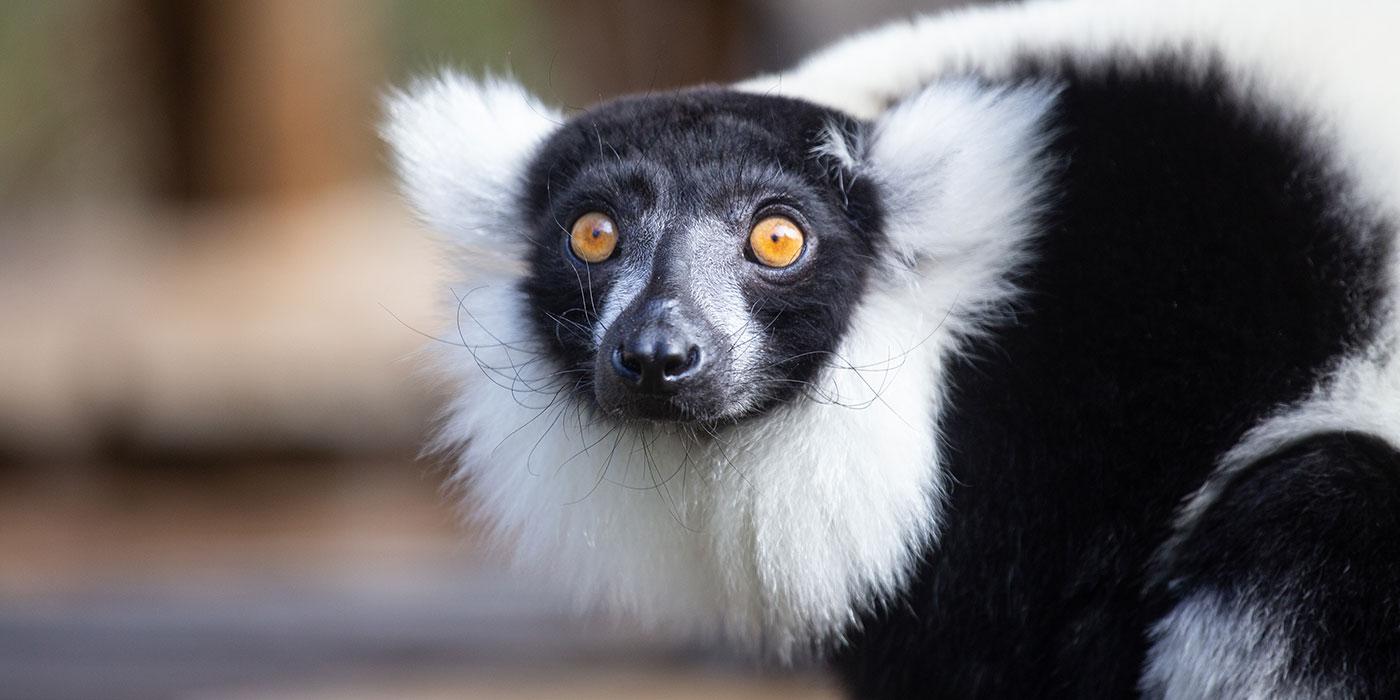
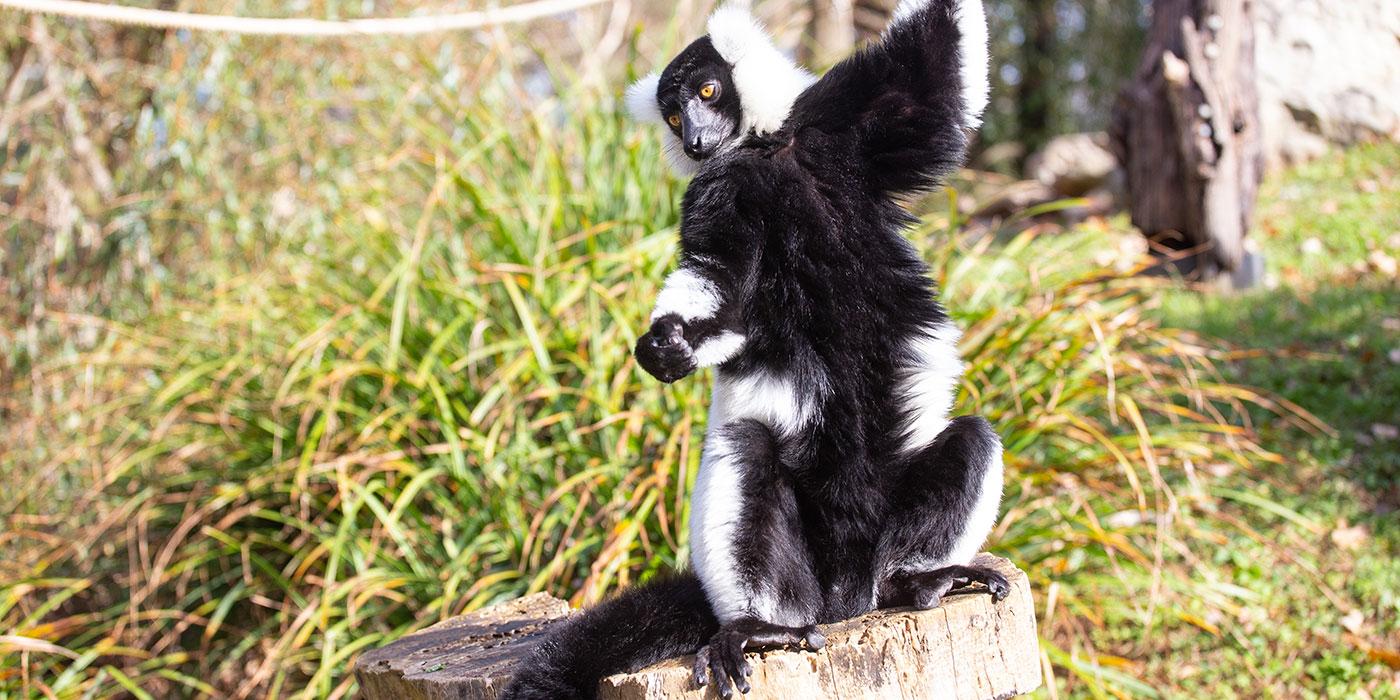
As their name suggests, black-and-white ruffed lemurs have black and white bodies. Not all individuals have the same black and white markings, but their hands, feet, tails, faces and heads are typically black, with a distinctive white ruff around their necks. In some individuals, patches of white can appear yellowish. These lemurs also have bright yellow eyes.
Size
Black-and-white ruffed lemurs can reach 20 to 22 inches (50 to 55 centimeters) in body length and an additional 24 to 26 inches (61 to 66 centimeters) in tail length. Adults weigh between 6.6 and 10 pounds (3 and 4.5 kilograms).
Native Habitat
Like all lemur species, black-and-white ruffed lemurs can only be found in Madagascar. They have a patchy distribution in eastern Madagascar, with three subspecies identified along the range.
Lifespan
Black-and-white ruffed lemurs are thought to live an average of 19 years in the wild, sometimes longer in human care.
Communication
As is common with lemur species, black and white ruffed lemurs have an array of vocalizations they use to communicate. When alarmed, they produce a deep, barking call and when defending their territory, they emit a wailing howl.
Food/Eating Habits
As a primarily arboreal and quadrupedal species, they often walk, run and leap from branch to branch. Because ruffed lemurs are especially frugivorous, they are also adept at suspending from their feet to help reach ripe fruit hanging from the tree branches. This is known as suspensory movement and is exhibited in this species more so than other lemur species. Social structure consists of small family groups, typically between two and five individuals. Black-and-white ruffed lemurs have been observed in larger groups of up to 16 individuals but those large groups are typically comprised of several smaller groups.
In the wild, they are primarily frugivorous, but will also eat a variety of seeds, leaves and nectar, which they are able to reach with their long tongues. Black-and-white ruffed lemurs are also known as the world's largest pollinators, due to their mutualistic relationship with the traveler's tree (also known as the traveler's palm). They have the unique ability, among pollinators, to open the tree's flowers. While the lemurs benefit by eating the nectar within the flowers, the tree benefits from the pollination that occurs when the pollen sticks to the lemurs' faces and gets transported to the next tree.
At the Smithsonian's National Zoo, they receive a diet consisting of greens, fruits, vegetables and leaf eater biscuits.
Sleep Habits
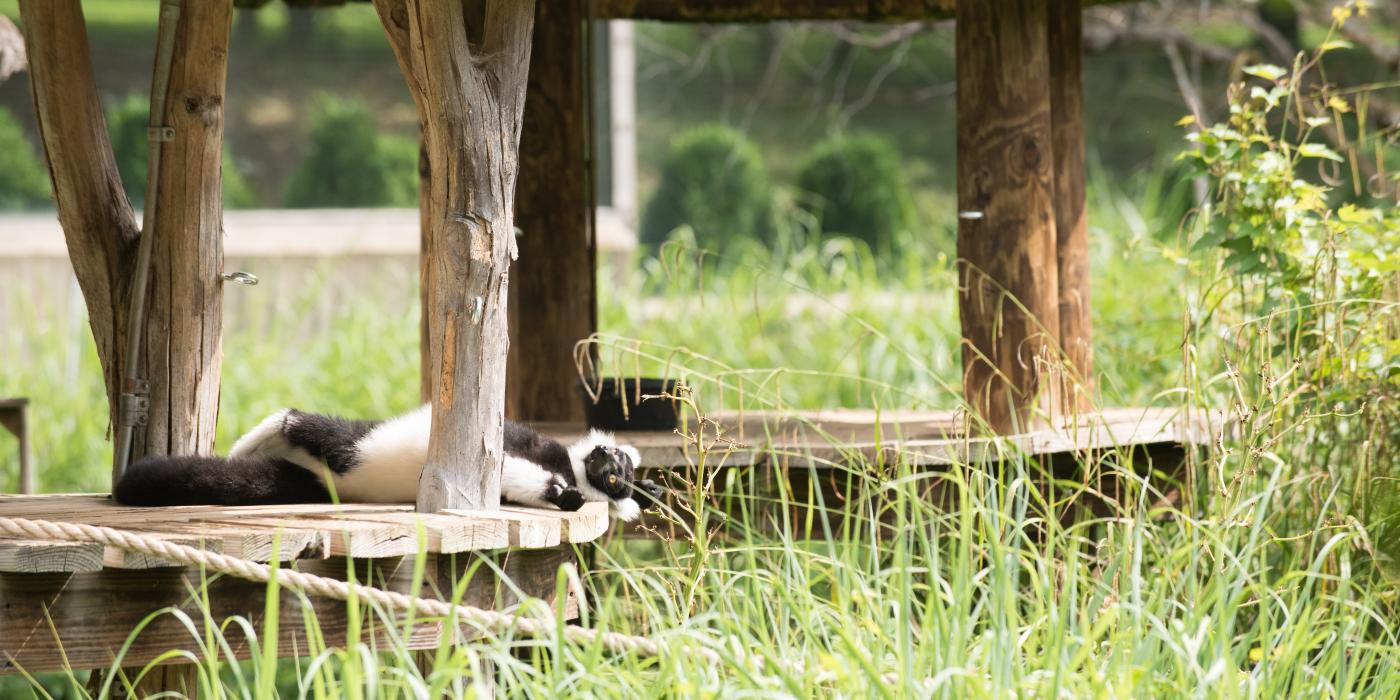
Black-and-white ruffed lemurs are a largely diurnal species. They are primarily active during the day, especially in the morning and late afternoon.
Reproduction and Development
Females commonly give birth to twins or triplets after a 90 to 120 day gestation period, though they may give birth to as many as six offspring in one litter.
Black-and-white ruffed lemurs make a nest for their young, placing it in the trees roughly 32 to 65 feet (10 to 20 meters) above the ground out of branches, leaves and other foliage. Young stay in the nest while the female forages and until they are more independent. When a female needs to travel with her young, she carries them in her mouth, rather than on her belly, as is common in most other lemur species.
Young become independent at about 4 months and reach maturity around 20 months. In their native Madagascar, the breeding season is between May and June. In North American zoos, their breeding season is in December and January.
Conservation Efforts
The primary threats facing black-and-white ruffed lemurs include logging, slash-and-burn agriculture, mining, development and hunting. Their large size and diurnal activities make them easier targets for hunters and this has put a great pressure on their population.
The population of black-and-white ruffed lemurs is thought to have decreased more than eighty percent over a span of 21 years. With no room for expansion, island ecosystems are fragile, and animals within that ecosystem are highly impacted by human activities, including habitat destruction and fragmentation. While efforts are in place to reintroduce black-and-white ruffed lemurs, reintroduction is not always successful. Protecting and preserving lemur habitats in Madagascar is essential to their survival.
Help this Species
Reduce, reuse and recycle — in that order! Cut back on single-use goods, and find creative ways to reuse products at the end of their life cycle. Choose recycling over trash when possible.
Share the story of this animal with others. Simply raising awareness about this species can contribute to its overall protection.
Smithsonian's National Zoo and Conservation Biology Institute. (n.d.). Black-and-white ruffed lemur. Retrieved September 5, 2026, from https://www.nationalzoo.si.edu/index%2Ephp/animals/black-and-white-ruffed-lemur
Animal News

8 Reasons Why Zoo Staff Think the Chacoan Peccary Might Be Your New Favorite Animal ›
Two animal care experts share why this new species might become your next obsession.

Look Back At Linh Mai’s Most Memorable Moments As She Turns 7 Months Old ›
Seven months ago, the world fell in love with a little Asian elephant named Linh Mai. As she turns 7 months old, we're taking a look back at her most memorable moments.

Three Adorable Red Panda Cubs Born This Summer at the Zoo’s Front Royal Campus ›
“The cubs are really just balls of fur that eat and sleep right now,” said Jessica Kordell, assistant curator of carnivores.