
Physical Description
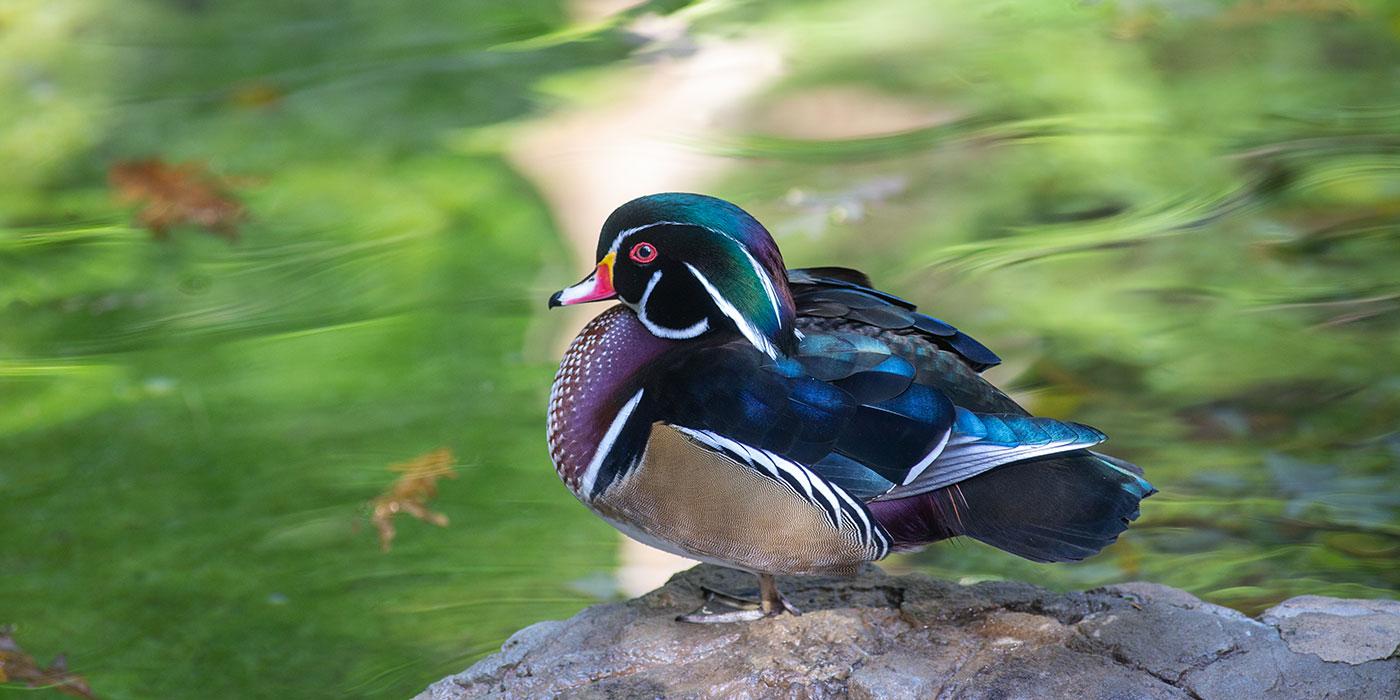
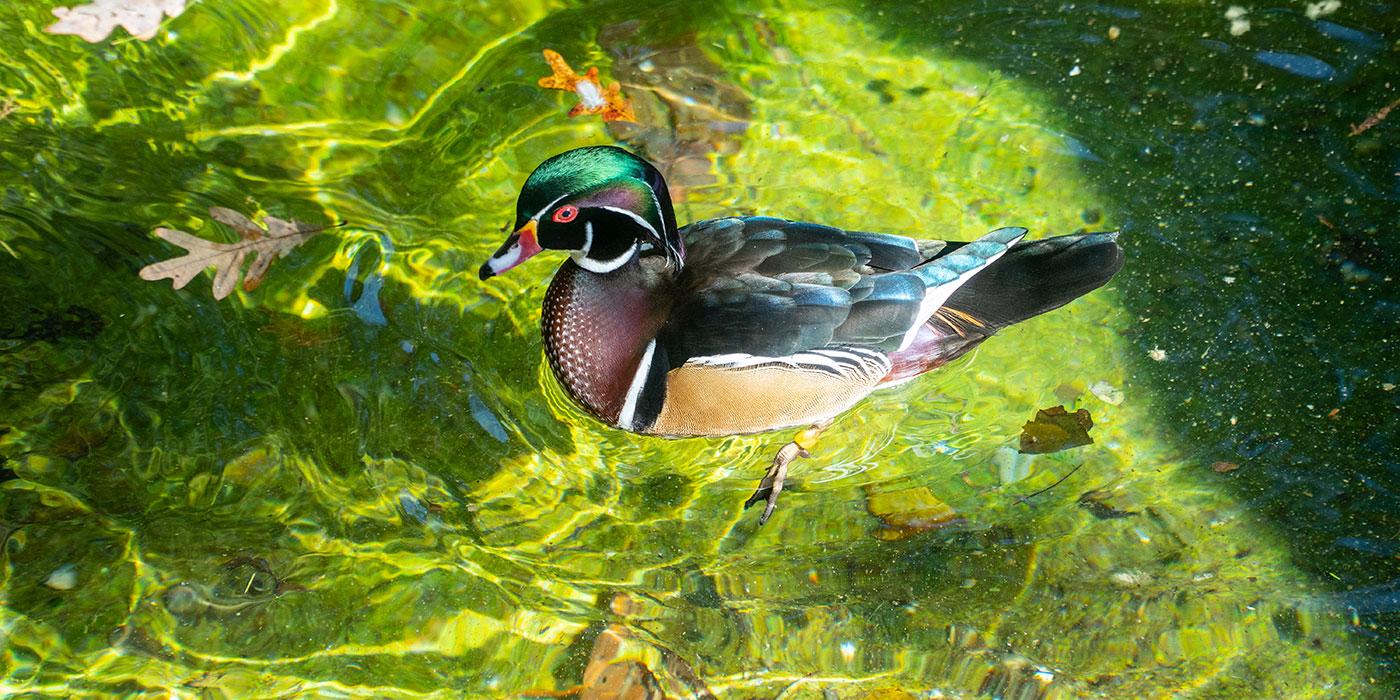
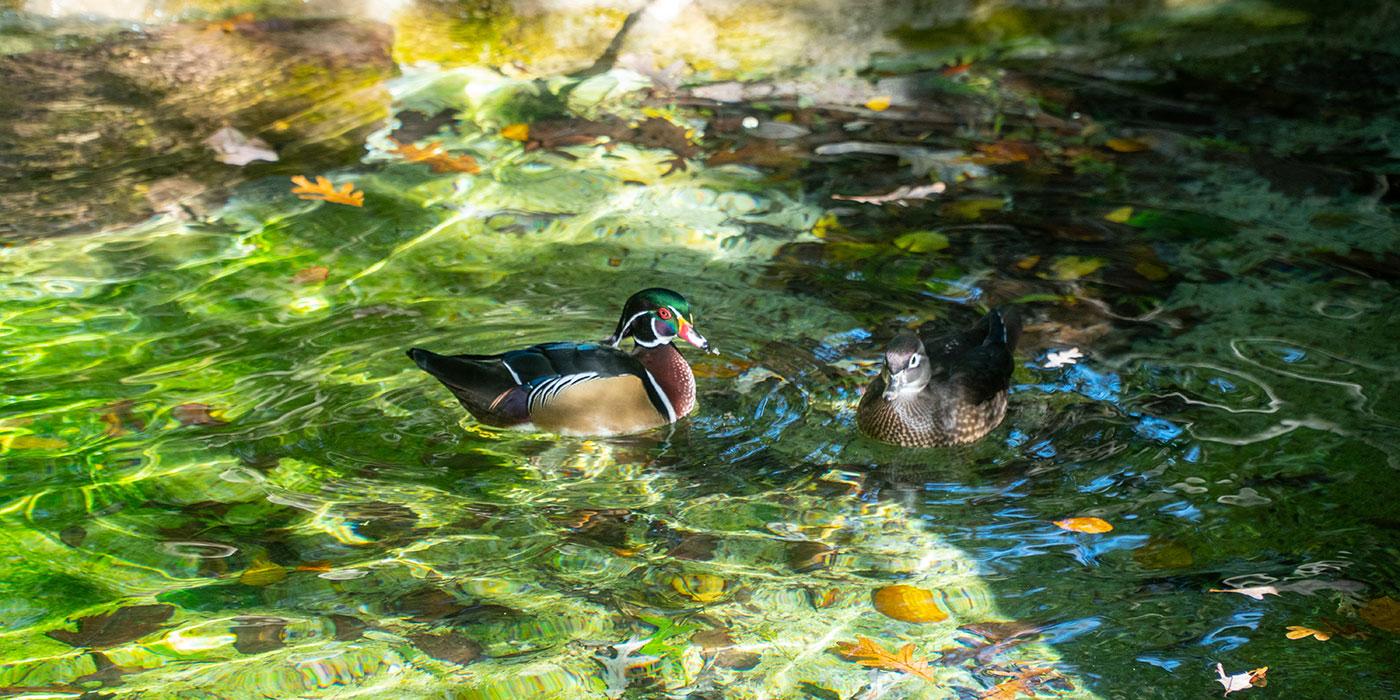
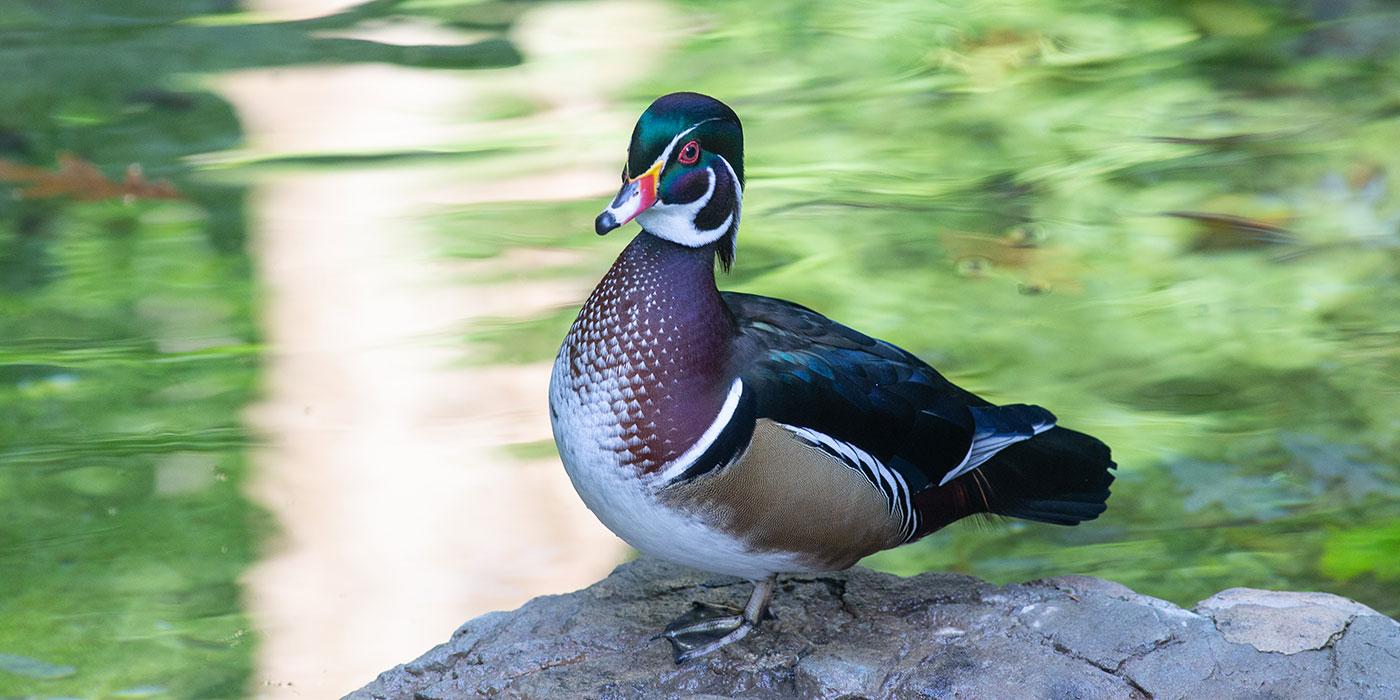
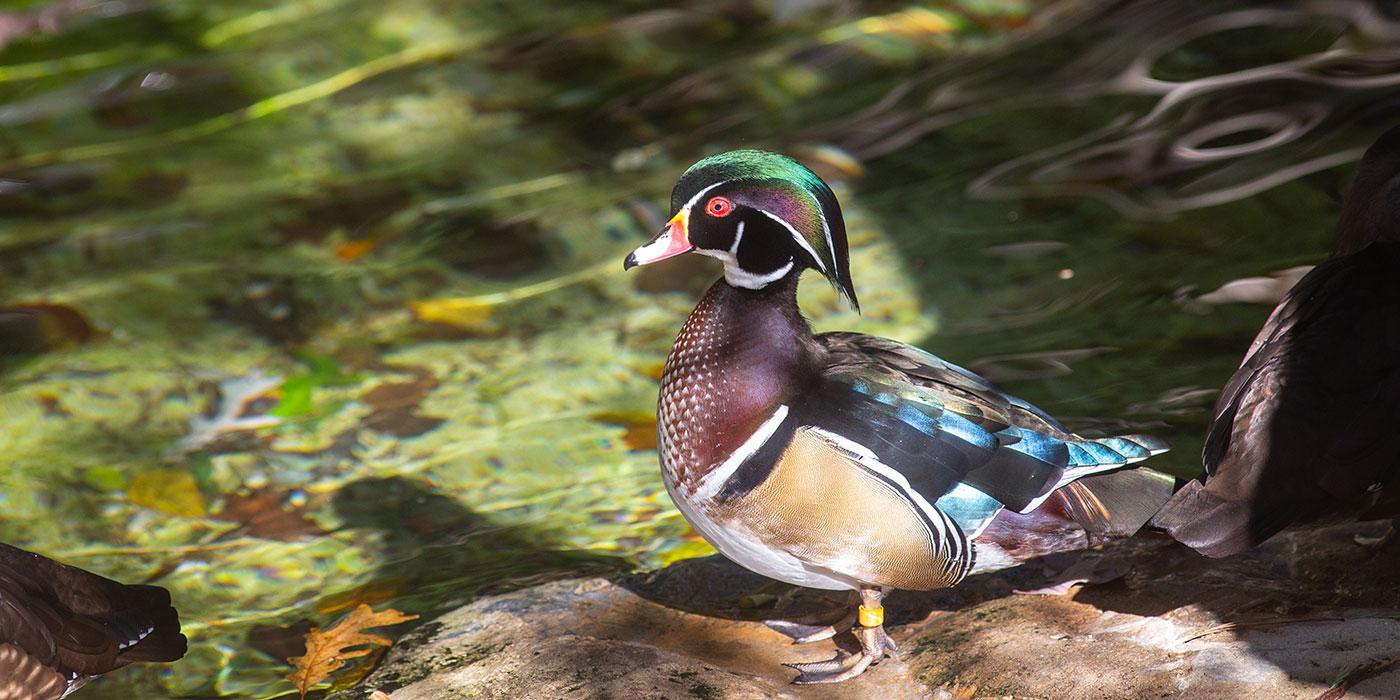
Both adults have a crested head, white belly and a white line at the back of the wing, which is most easily seen while the bird is in flight. The male has iridescent green, blue, and purple feathers on its head, with two white lines that run parallel to each other from the base of the bill and behind the eye to the back of the head.
The male also has a white chin and throat, red eyes, red at the base of the bill, a deep rust-colored chest, bronze sides, and a black back and tail. In contrast, the female is gray-brown overall, with white eye rings and a white throat and chin.
Size
Native Habitat
These ducks are mainly found along eastern North America. They are also in the west, from the northern two-thirds of California to southern British Columbia. Wood ducks prefer wooded swamps and river bottomlands. Natural cavities in trees serve as nests sites.
Unlike most other dabbling ducks, wood ducks do not have a stable home range. Their home range changes according to the rise and fall of floodwaters.
Communication
Food/Eating Habits
Wood ducks feed in flooded timber or wooded swamps, eating the seeds of the trees that occupy these areas. They may also occasionally feed in fields, eating grains such as corn and wheat.
At the Smithsonian's National Zoo they eat sinking duck pellets, mealworms and chopped greens.
Reproduction and Development
Pairing for breeding begins as early as late October and continues through February, sometimes even into early spring. Wood ducks remain with their mates longer than most ducks, usually until the eggs are pipped.
The wood duck is a cavity nester, readily using manmade nest boxes when natural cavities are limited. Normal clutch size is six to 10 bone-white eggs. Females incubate the eggs for approximately 30 days, only leaving the nest twice a day. The young are precocial, meaning they are born relatively advanced and able to feed themselves almost immediately. They remain in the nest for just 24 hours after hatching.
Conservation Efforts
In the early 1900s, overhunting nearly caused the wood duck's extinction. The 1918 Migratory Bird Treaty Act between the U.S. and Canada made it possible to give the wood duck complete protection and reduced hunting seasons through fall and early winter.
Currently hunting is not an issue, and the range of this duck is very large. There are no significant documented threats to this species, population numbers are increasing and it is well-represented in its historic range.
Help this Species
Organize or attend a stream, river, lake or other waterway cleanup in your area to preserve aquatic habitats for local species.
Are you a student? Did you love what you learned about this animal? Make it the topic of your next school project, or start a conservation club at your school. You'll learn even more and share the importance of saving species with classmates and teachers, too.
Protect local waterways by using fewer pesticides when caring for your garden or lawn. Using fertilizers sparingly, keeping storm drains free of litter and picking up after your pet can also improve watershed health.
Smithsonian's National Zoo and Conservation Biology Institute. (n.d.). Wood duck. Retrieved September 23, 2026, from https://www.nationalzoo.si.edu/animals/wood-duck
Animal News

Happy 5th Birthday, Qing Bao ›
To celebrate giant panda Qing Bao's birthday, keepers went "far out" and created a 1970s-themed fête full of bright colors and iconic pop culture slogans.

See These 5 New Animals at Your Next Visit to the Smithsonian's National Zoo ›
From a spunky new sloth to a dazzling electric eel, get ready to meet the newest residents making themselves at home.

Happy 50th 'Zooniversary' to Chyna and Rulon, the Zoo’s Aldabra Giant Tortoises ›
There are plenty of objects and artifacts at the Smithsonian that are old. But at the National Zoo, there's not much older than Rulon and Chyna.