
Physical Description
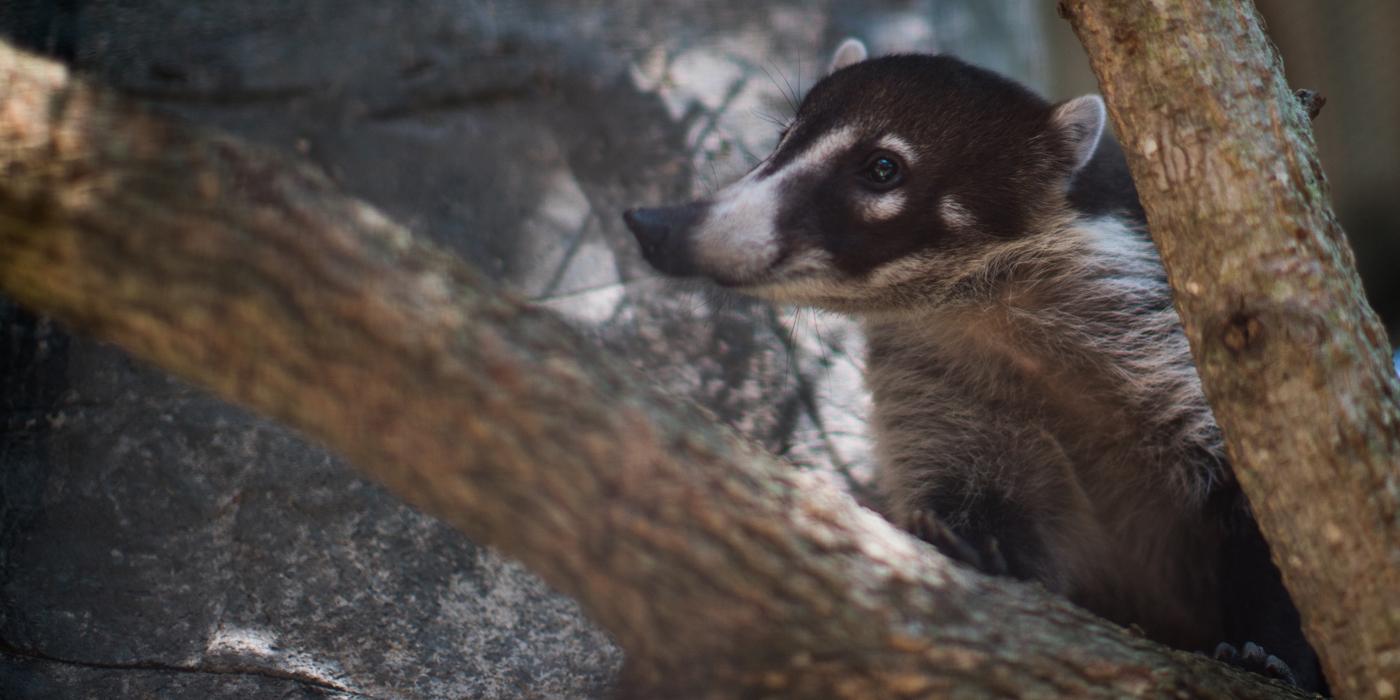
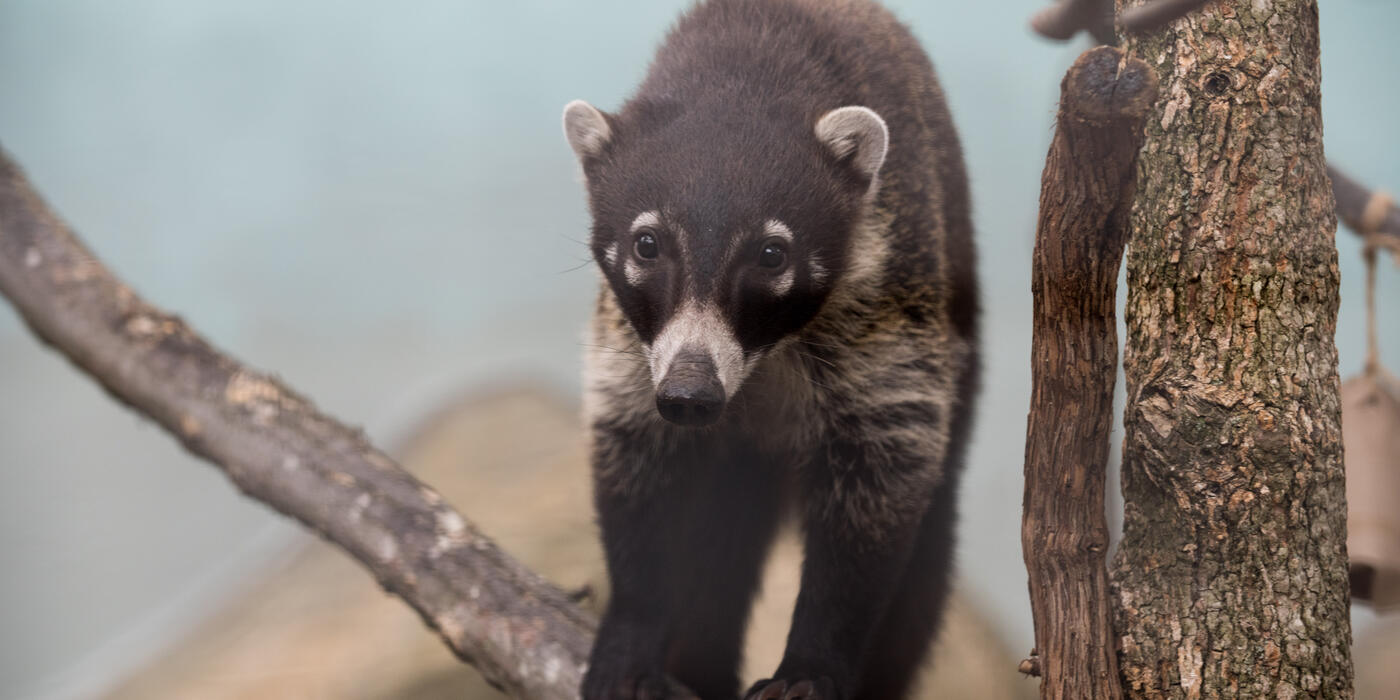
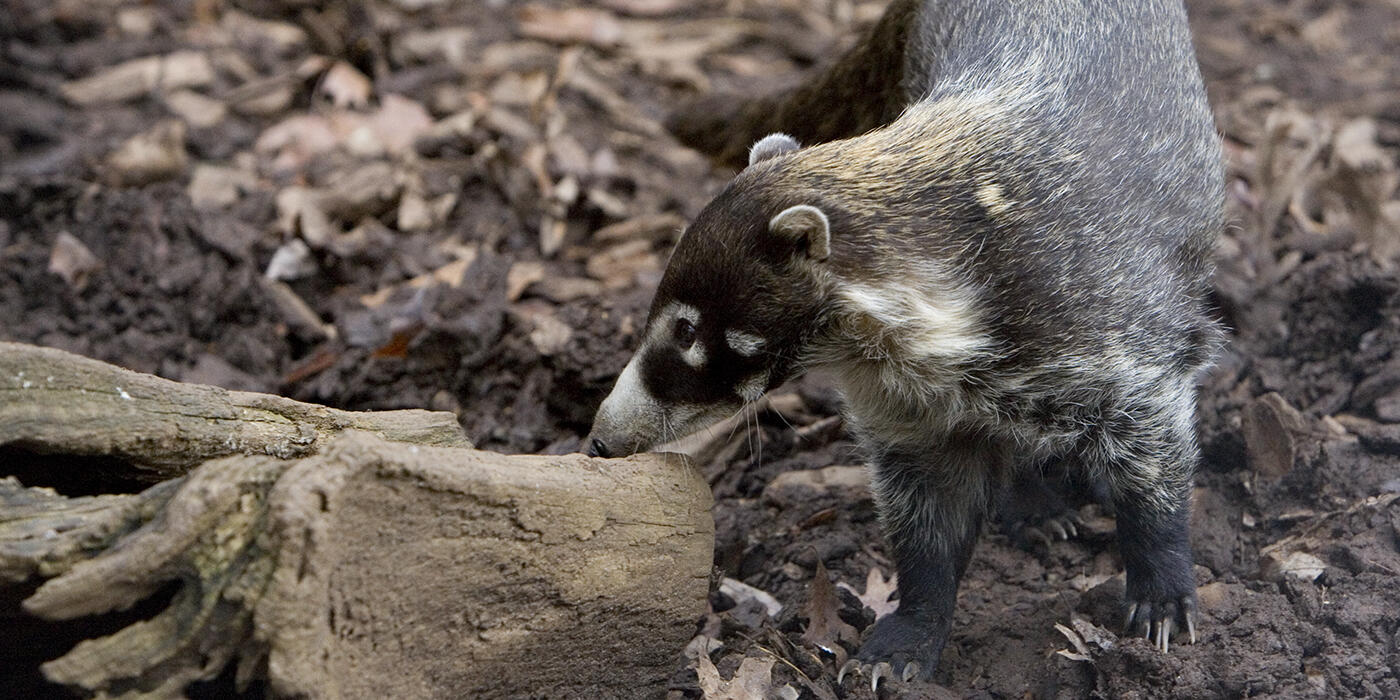
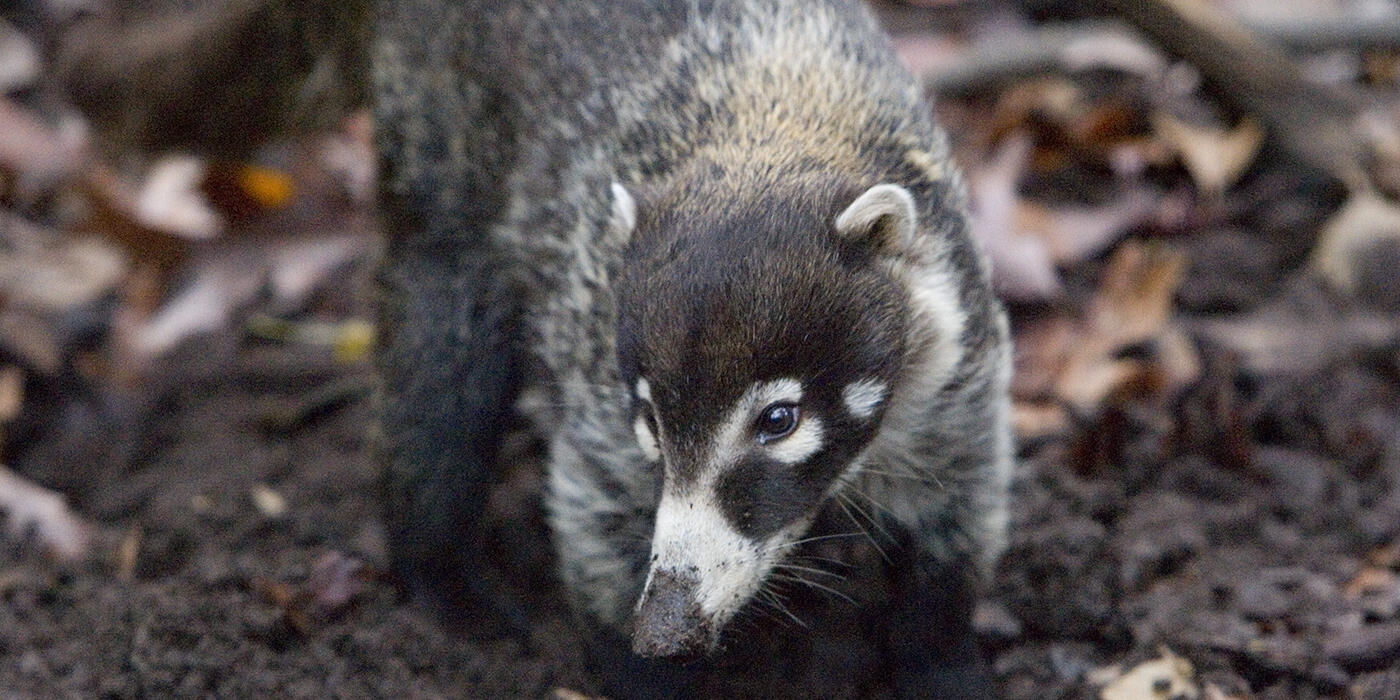
White-nosed coatis are reddish brown to black with lighter underparts. The coati's face has black and gray markings with a white spot above and below each eye, on each cheek and around the end of the muzzle. The tail is banded with black rings. The coati's long, highly mobile snout is well adapted to investigating crevices and holes, and they have strong claws for digging.
Size
Native Habitat
White-nosed coatis are found in North, Central and South America, ranging from Arizona to Argentina. This species can be found in a variety of habitats, including dry, open forests and tropical woodlands.
Lifespan
Food/Eating Habits
Social Structure
Male coatis younger than two years of age and females, both related and unrelated, will group together in bands of four to 20 individuals. Adult, male coatis are solitary animals, except during breeding season. Coatis have been called "coatimundi" or "coati-mondi" meaning "lone coati" in Guarani, a native language of Brazil. The name came about as a result of biologists describing solitary male coatis that they believed at the time to be a separate species.
Reproduction and Development
The breeding season occurs when fruit is most available and there is less competition for food. The coati's gestation period is 10 to 11 weeks, and litters consist of two to seven young. The young are weaned at four months and reach adult size at 15 months.
Females live in groups, called bands, along with their young, including males up to two years old. Adult males are solitary, except during the breeding season.
Conservation Efforts
White-nosed coatis are considered a species of least concern on the IUCN's Red List of Threatened Species. They are protected under CITES Appendix III by Honduras, and are offered protection as an endangered species in New Mexico.
The primary threats to coatis are habitat loss and hunting. Coatis are hunted for their meat and their pelts and are sometimes captured in traps intended for other species or accidentally killed by hunters seeking other animals. Coatis are also occasionally kept as pets. Distemper and rabies affect coati populations, and natural predators include cats, boas and large birds.
This species suffered significant population declines in the 1960s but has since recovered. White-nosed coatis have extended their range into the United States since the beginning of the twentieth century.
Help this Species
Be a smart consumer. Choose products made with sustainable ingredients, such as Smithsonian certified Bird Friendly coffees, which support farmers striving to limit their impact on wildlife and habitat.
Choose your pets wisely, and do your research before bringing an animal home. Exotic animals don’t always make great pets. Many require special care and live for a long time. Tropical reptiles and small mammals are often traded internationally and may be victims of the illegal pet trade. Never release animals that have been kept as pets into the wild.
Share the story of this animal with others. Simply raising awareness about this species can contribute to its overall protection.
Are you a student? Did you love what you learned about this animal? Make it the topic of your next school project, or start a conservation club at your school. You'll learn even more and share the importance of saving species with classmates and teachers, too.
Meet the Animals
Smithsonian's National Zoo and Conservation Biology Institute. (n.d.). White-nosed coati. Retrieved August 3, 2026, from https://www.nationalzoo.si.edu/index%2Ephp/animals/white-nosed-coati
Animal News

Peek Inside Our Bat-eared Fox Family’s Den ›
Feast your eyes on our frisky bat-eared fox kits—the first born here in 75 years—in this keeper Q&A!

Happy National Zookeeper Week 2026 ›
Join us in celebrating the dedicated professionals who care for our animal ambassadors!

Asian Elephant Calf Linh Mai Takes Her First Swim, Showing Off Her Pachyderm Paddle ›
Look who’s learning to “elephant paddle!” Linh Mai, our 5-month-old Asian elephant calf, reached a major milestone this week: baby’s first swim!