
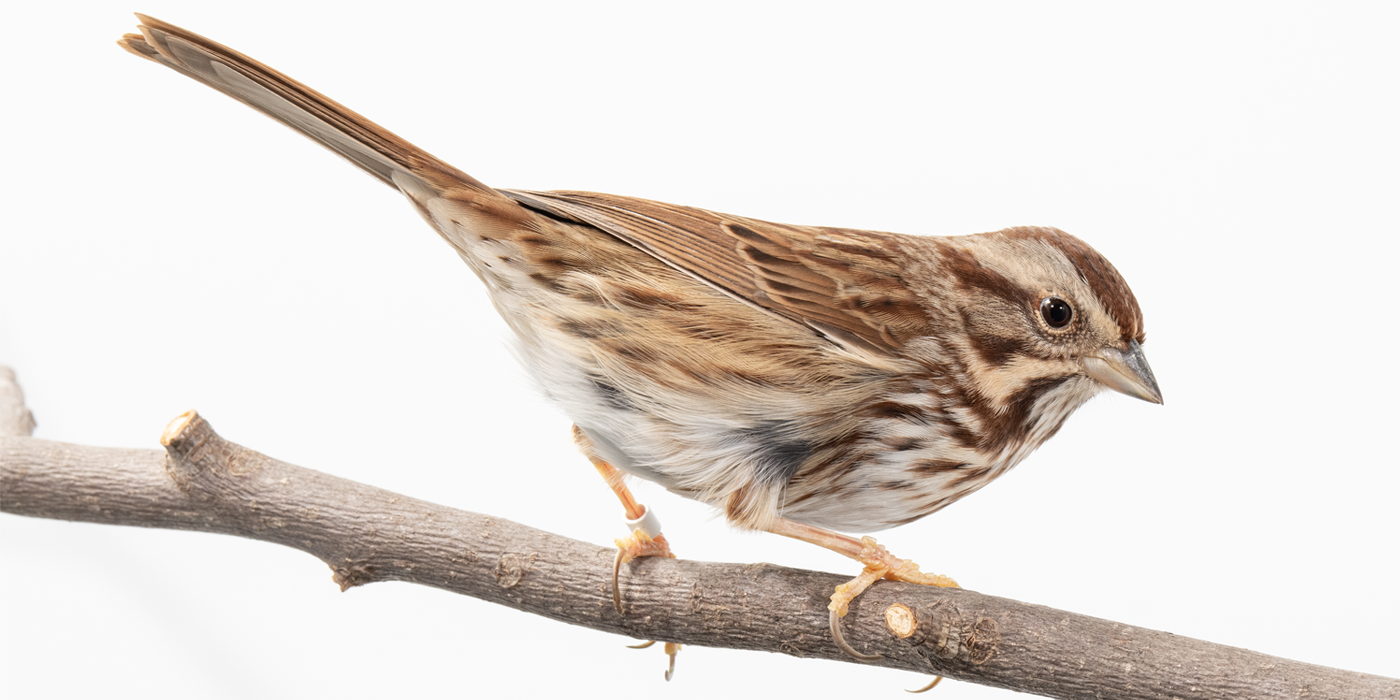
Physical Description
Size
Native Habitat
Nesting grounds include open woodlands, shrubby fields and wet areas with dense foliage. They are also commonly found in areas with human development, like suburban parks or backyards.
Communication
Food/Eating Habits
Social Structure
Reproduction and Development
Nests are usually constructed on the ground among shrubs or in a clump of weeds, although they will sometimes build nests higher off the ground. Their nests are cup-shaped and are lined with twigs, grasses, leaves, and animal hair. Females lay clutches of between three and five eggs that are light colored with brown to red-brown spots.
Females incubate the eggs for about 12-14 days. Both parents help with care and feeding for the nestlings, who are ready to leave the nest for the first time about 10 days after hatching, although they will remain with their parents for two to three more weeks before they are ready to live on their own.
Song sparrows are known to re-nest in the same location for multiple years.
Conservation Efforts
Help this Species
Reduce, reuse and recycle — in that order! Cut back on single-use goods, and find creative ways to reuse products at the end of their life cycle. Choose recycling over trash when possible.
Be a smart consumer. Choose products made with sustainable ingredients, such as Smithsonian certified Bird Friendly coffees, which support farmers striving to limit their impact on wildlife and habitat.
Avoid single-use plastics, such as plastic bottles, bags and utensils. Choosing reusable options instead can help reduce plastic pollution.
Plant native flowers in your garden to help feed resident and migrating pollinators. You'll make your lawn beautiful and help wildlife at the same time!
Less is more. Cut down on the demand for resources by consuming less. Buy only what you need, and look for pre-owned or repurposed items before purchasing something brand new.
Smithsonian's National Zoo and Conservation Biology Institute. (n.d.). Song sparrow. Retrieved August 22, 2026, from https://www.nationalzoo.si.edu/index%2Ephp/animals/song-sparrow
Animal News

Three Adorable Red Panda Cubs Born This Summer at the Zoo’s Front Royal Campus ›
“The cubs are really just balls of fur that eat and sleep right now,” said Jessica Kordell, assistant curator of carnivores.

How Smithsonian Science Is Helping the Scimitar-Horned Oryx Recover — and Thrive ›
Once pushed to the brink of extinction, the oryx is becoming one of conservation's most inspirational stories.

11 Fascinating Facts About the Hellbender, North America’s Largest Amphibian ›
Hiding in Appalachia’s cool mountain streams is one impressively large salamander.