

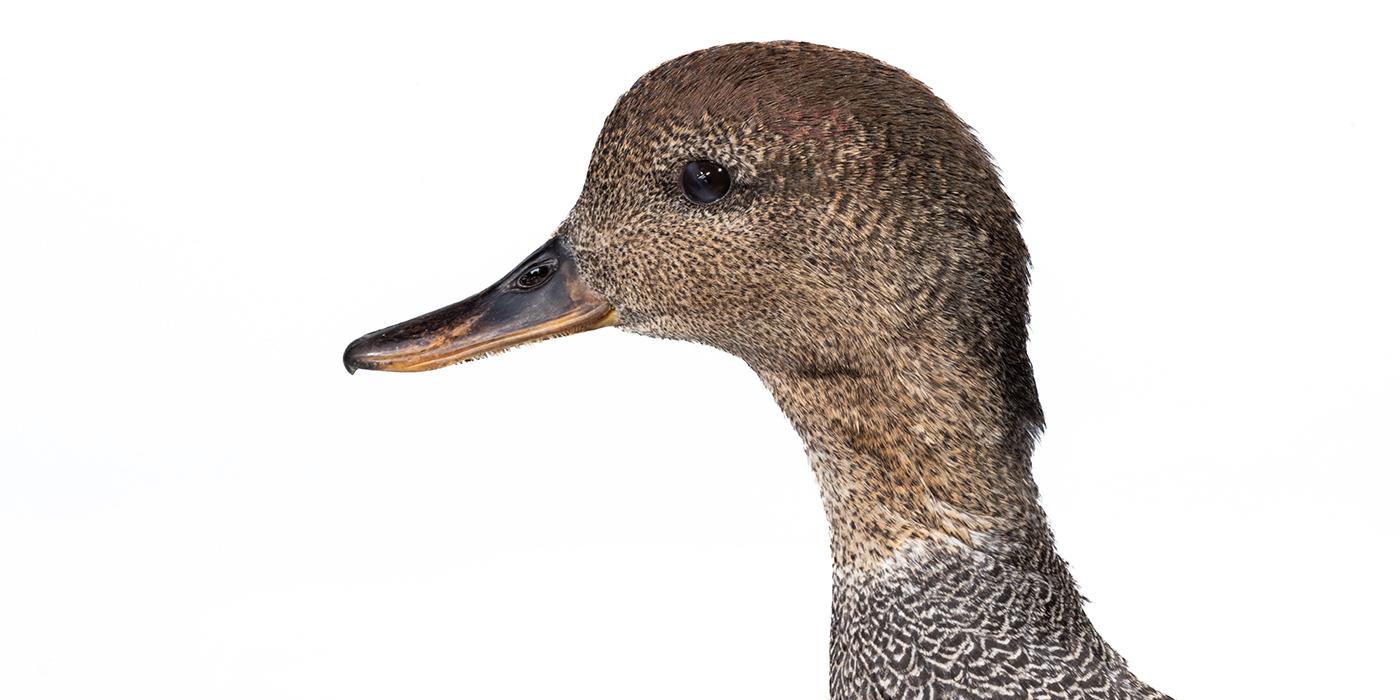
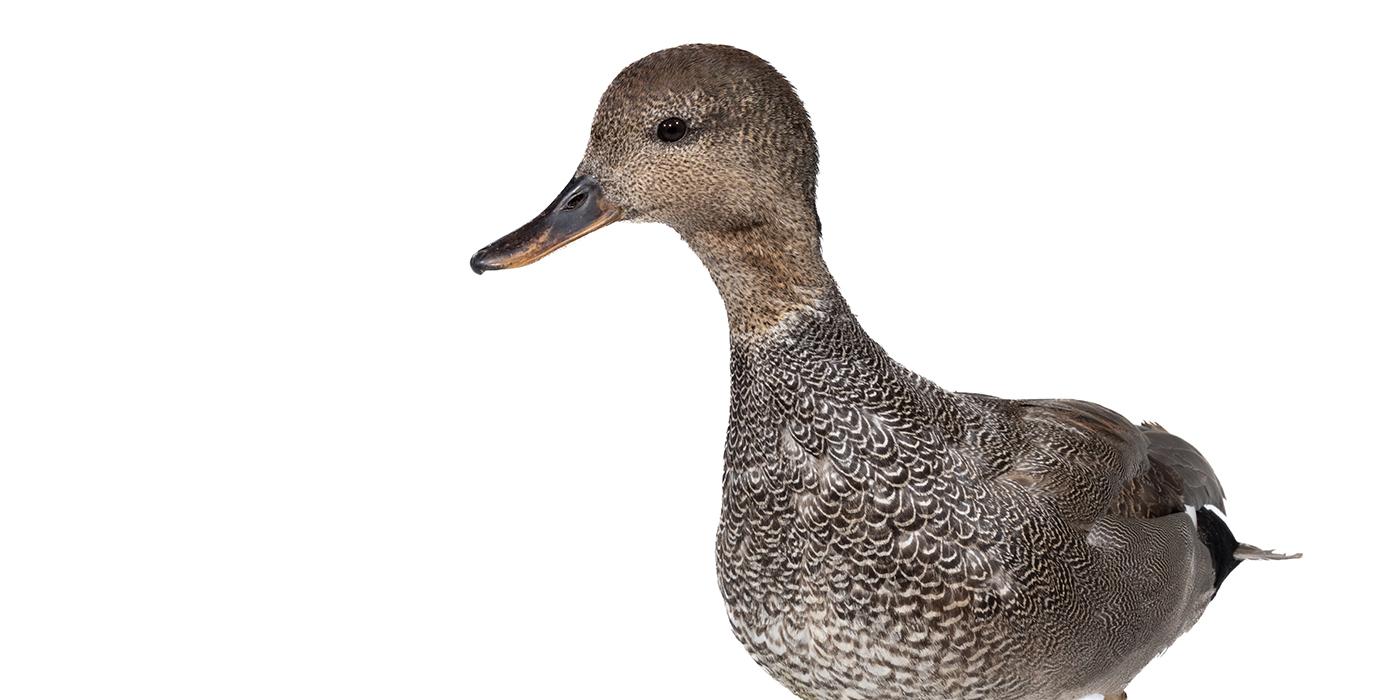
Gadwalls may appear to be simple brown ducks from afar. But up close, their subtle beauty and intricately patterned plumage emerges. Gadwalls are dabbling ducks, meaning they feed by tipping their heads downwards to feed while floating—sticking their tails and feet in the air in the process.
Physical Description
Males are gray, brown, and black with intricate patterning on their chests, necks, and sides. Females are various shades of brown and closely resemble female mallards, but with a thinner bill that is darker in color.
Size
Gadwalls are 18-22 inches (46-57 centimeters) long, weigh 17-44 ounces (500-1,250 grams), and have a wingspan of 33-37 inches (84-95 centimeters).
Native Habitat
Gadwall can be found in small bodies of water with plenty of aquatic vegetation, from ponds and lakes to marshes and wetlands.
Gadwall are found north of the equator, in North America, Iceland, Europe, Africa, and Asia. In North America, they mostly breed in the prairie pothole region of the United States and Canada’s Great Plains, and they spend their winters in the central and southern U.S. and Mexico.
Lifespan
Usually between 5 and 10 years.
Communication
Gadwalls communicate with sound via quacking sounds and with visual displays, especially during breeding season.
Food/Eating Habits
Gadwalls feed mainly on the leaves and stems of aquatic plants. They sometimes supplement their diet with invertebrates including snails, crabs, insects, and, on rare occasions, small fish.
Sleep Habits
Active during the day and at night, especially at dawn and dusk.
Social Structure
Like most ducks, this species tends to flock together in small to medium-sized groups. During the breeding season they form monogamous pairs.
Reproduction and Development
These ducks nest on the ground near water and females lay between 8 and 12 eggs per clutch. The female incubates the eggs for 24-27 days. The young can typically fly by 7-8 weeks.
Help this Species
Smithsonian's National Zoo and Conservation Biology Institute. (n.d.). Gadwall. Retrieved August 16, 2026, from https://www.nationalzoo.si.edu/index%2Ephp/animals/gadwall
Animal News

11 Fascinating Facts About the Hellbender, North America’s Largest Amphibian ›
Hiding in Appalachia’s cool mountain streams is one impressively large salamander.

Happy 5th Birthday, Bao Li ›
Giant panda Bao Li celebrated turning 5 years old with a shark-themed birthday bash, complete with a fruitsicle "cake" and boat buoy enrichment.

Peek Inside Our Bat-eared Fox Family’s Den ›
Feast your eyes on our frisky bat-eared fox kits—the first born here in 75 years—in this keeper Q&A!