


Physical Description
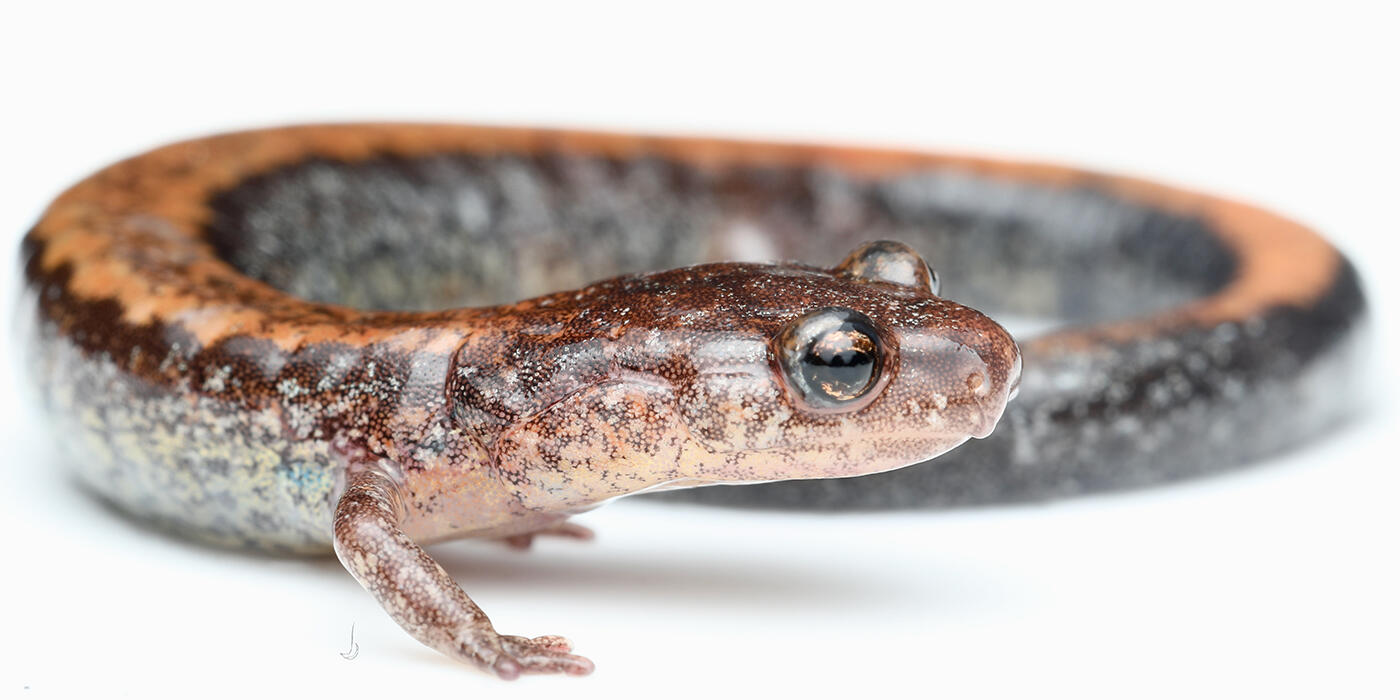
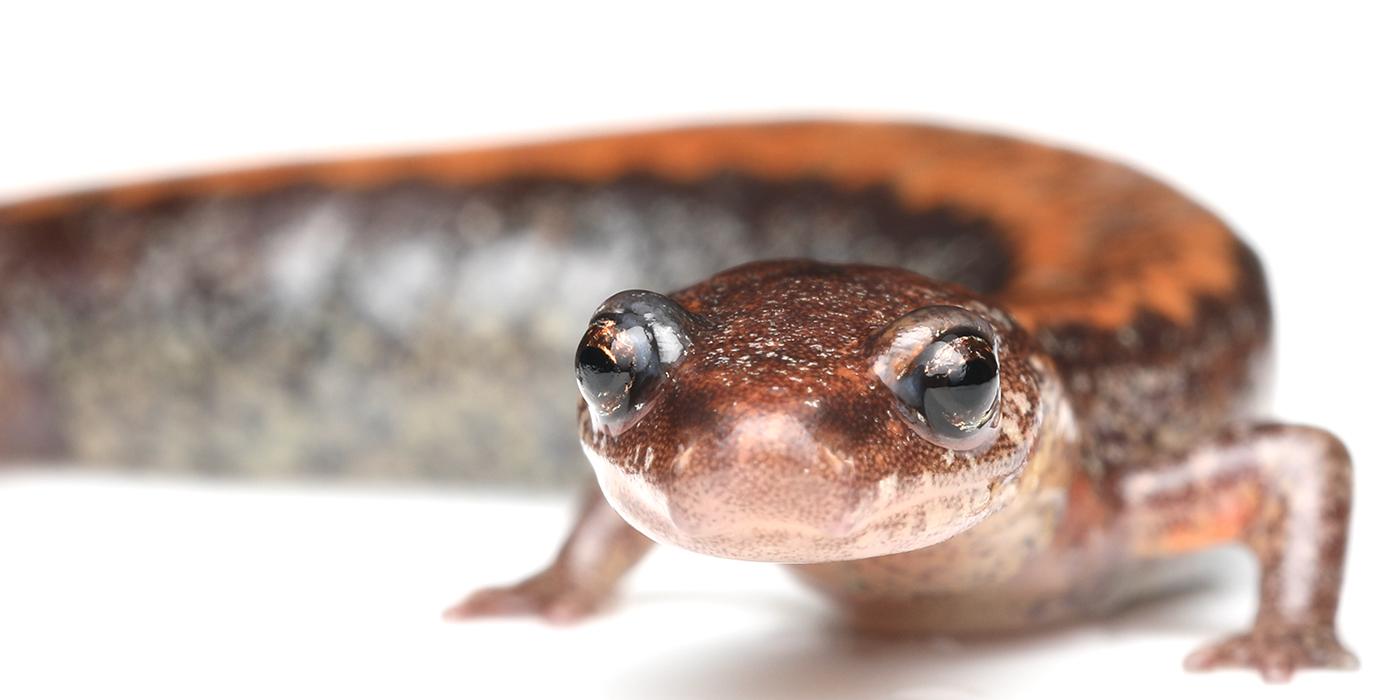
Eastern red-backed salamanders can occur in two color phases, lead-back and red-back. The lead-back phase salamanders are a consistent gray to black color while the red-back phase is characterized by an orange to red stripe down the length of their body and tail. In both phases, they are distinguishable by their mottled white and black undersides and five toes on their hind feet. They also lack lungs.
Eastern red-backed salamanders can evade predators by dropping all or part of their tail in the event of an attack. In its place, a new tail will eventually grow, though this new tail may be duller in color.
Size
Adults may reach between 2 and 5 inches (5 to 12.7 centimeters) in length.
Native Habitat
Eastern red-backed salamanders extend from Minnesota to North Carolina and northeastern Tennessee in the United States, and from western Ontario to southern Quebec and throughout Nova Scotia in Canada.
Due to their lack of lungs, eastern red-backed salamanders need to live in damp or moist habitats in order to breathe. They are often found in or under logs, leaf-litter and burrows of deciduous forests. In colder months, these salamanders go under the frozen ground. With a low tolerance for acidic soil, they cannot live in areas with high acidity.
Lifespan
Lifespan for the eastern red-backed salamander is approximately 25 years in human care.
Food/Eating Habits
In the wild, eastern red-backed salamanders eat a wide variety of small invertebrates, including arachnids, worms, snails, larvae and insects. Since they only inhabit damp habitats, their foraging range is dependent on the seasons, expanding in the wet seasons and retracting in the dry seasons.
At the Smithsonian's National Zoo, eastern red-backed salamanders receive a mixture of crickets, fruit flies, bean beetles, isopods, springtails and black worms.
Social Structure
Noticeably territorial, eastern red-backed salamanders will mark their territory with their scent and dung to notify other salamanders of their presence, range and size. If another salamander enters their territory, these salamanders will exhibit threatening displays to scare off the intruder.
Reproduction and Development
Females lay eggs in dark, damp environments, including within log crevices and under rocks. Unlike many other amphibian species, there is no aquatic larval stage for eastern red-backed salamanders.
Conservation Efforts
Primary threats include habitat destruction and the presence of emerging diseases.
This species is abundant and occurs in several protected areas. Salamanders, like other amphibians, can absorb pollutants into their skin and are therefore highly susceptible to environmental contaminants.
Help this Species
Reduce, reuse and recycle — in that order! Cut back on single-use goods, and find creative ways to reuse products at the end of their life cycle. Choose recycling over trash when possible.
Organize or attend a stream, river, lake or other waterway cleanup in your area to preserve aquatic habitats for local species.
Smithsonian's National Zoo and Conservation Biology Institute. (n.d.). Eastern red-backed salamander. Retrieved August 1, 2026, from https://www.nationalzoo.si.edu/index%2Ephp/animals/eastern-red-backed-salamander
Animal News

Peek Inside Our Bat-eared Fox Family’s Den ›
Feast your eyes on our frisky bat-eared fox kits—the first born here in 75 years—in this keeper Q&A!

Happy National Zookeeper Week 2026 ›
Join us in celebrating the dedicated professionals who care for our animal ambassadors!

Asian Elephant Calf Linh Mai Takes Her First Swim, Showing Off Her Pachyderm Paddle ›
Look who’s learning to “elephant paddle!” Linh Mai, our 5-month-old Asian elephant calf, reached a major milestone this week: baby’s first swim!