
Physical Description
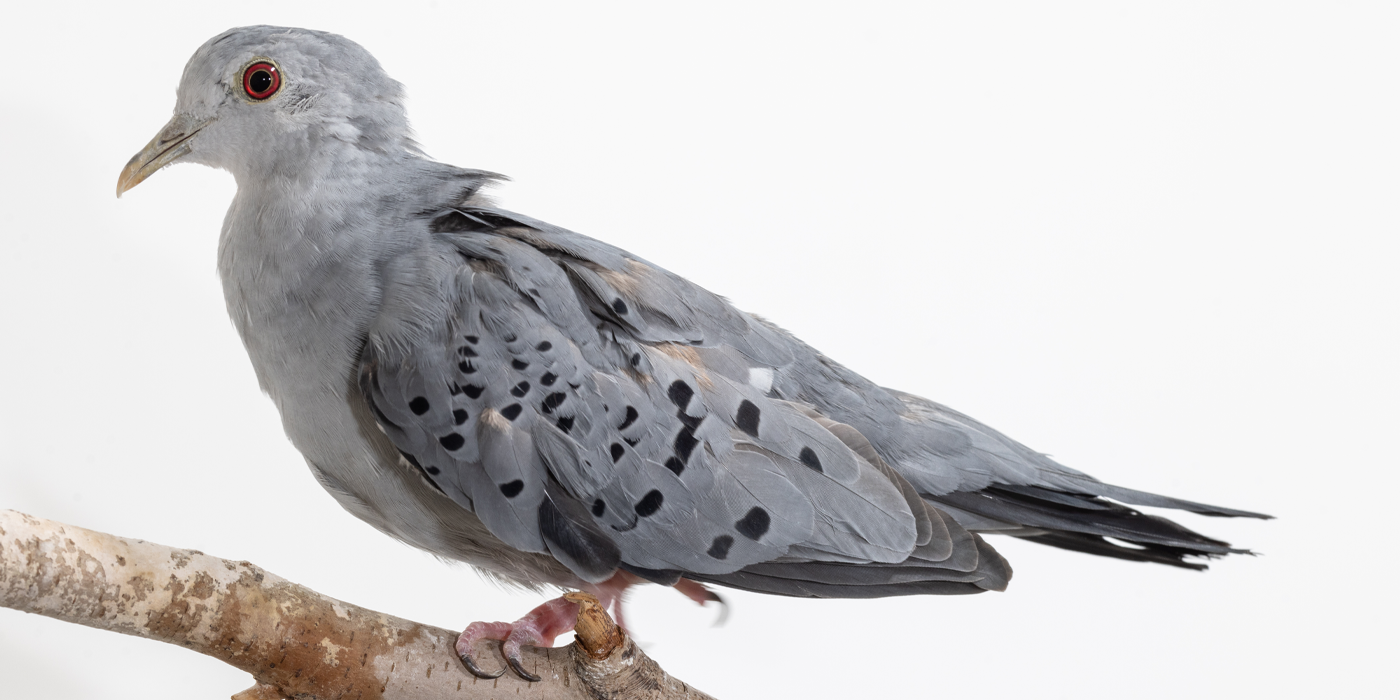
Males and females have different coloration. Males have a blue-gray coloring throughout their entire body, with pale blue underparts, black spots on their wings and dark wingtips. Females have dark brown to cinnamon-colored feathering, pale undersides, dark-brown wingspots and an orange tail. Both males and females have a red iris and a green eye ring, pink legs and rather long tails.
Size
Adult blue ground doves are about 8 inches (20 centimeters) long and weigh around 2.4 ounces (65-72 grams).
Native Habitat
These birds can be found in tropical, humid areas, and are often seen near forest edges, clearings and roadsides.
Their range extends from southeastern Mexico and parts of the Caribbean to northern Argentina and Peru.
Communication
Males call continuously during the breeding season. Their "boop" sound can be heard from the treetops.
Food/Eating Habits
Blue ground doves primarily eat seeds and small insects, which they find while foraging on the ground.
Social Structure
Blue ground doves often live alone, but are sometimes seen traveling in pairs or small groups, flying high over the treetops or searching the ground for food.
Reproduction and Development
After pairing up, females and males will work together to build their nests, which are frail and made of twigs and sticks. Females lay two white eggs, which are incubated for about two weeks before hatching. Both parents help feed the babies until they are ready to fly away from the nest on their own.
Help this Species
Be a smart consumer. Choose products made with sustainable ingredients, such as Smithsonian certified Bird Friendly coffees, which support farmers striving to limit their impact on wildlife and habitat.
Choose your pets wisely, and do your research before bringing an animal home. Exotic animals don’t always make great pets. Many require special care and live for a long time. Tropical reptiles and small mammals are often traded internationally and may be victims of the illegal pet trade. Never release animals that have been kept as pets into the wild.
Avoid single-use plastics, such as plastic bottles, bags and utensils. Choosing reusable options instead can help reduce plastic pollution.
Conservation starts with you! Join a citizen science project where you can help collect valuable data for scientists. Encourage your friends and family to get involved too.
Less is more. Cut down on the demand for resources by consuming less. Buy only what you need, and look for pre-owned or repurposed items before purchasing something brand new.
Smithsonian's National Zoo and Conservation Biology Institute. (n.d.). Blue ground dove. Retrieved August 24, 2026, from https://www.nationalzoo.si.edu/index%2Ephp/animals/blue-ground-dove
Animal News

Three Adorable Red Panda Cubs Born This Summer at the Zoo’s Front Royal Campus ›
“The cubs are really just balls of fur that eat and sleep right now,” said Jessica Kordell, assistant curator of carnivores.

How Smithsonian Science Is Helping the Scimitar-Horned Oryx Recover — and Thrive ›
Once pushed to the brink of extinction, the oryx is becoming one of conservation's most inspirational stories.

11 Fascinating Facts About the Hellbender, North America’s Largest Amphibian ›
Hiding in Appalachia’s cool mountain streams is one impressively large salamander.