
Physical Description
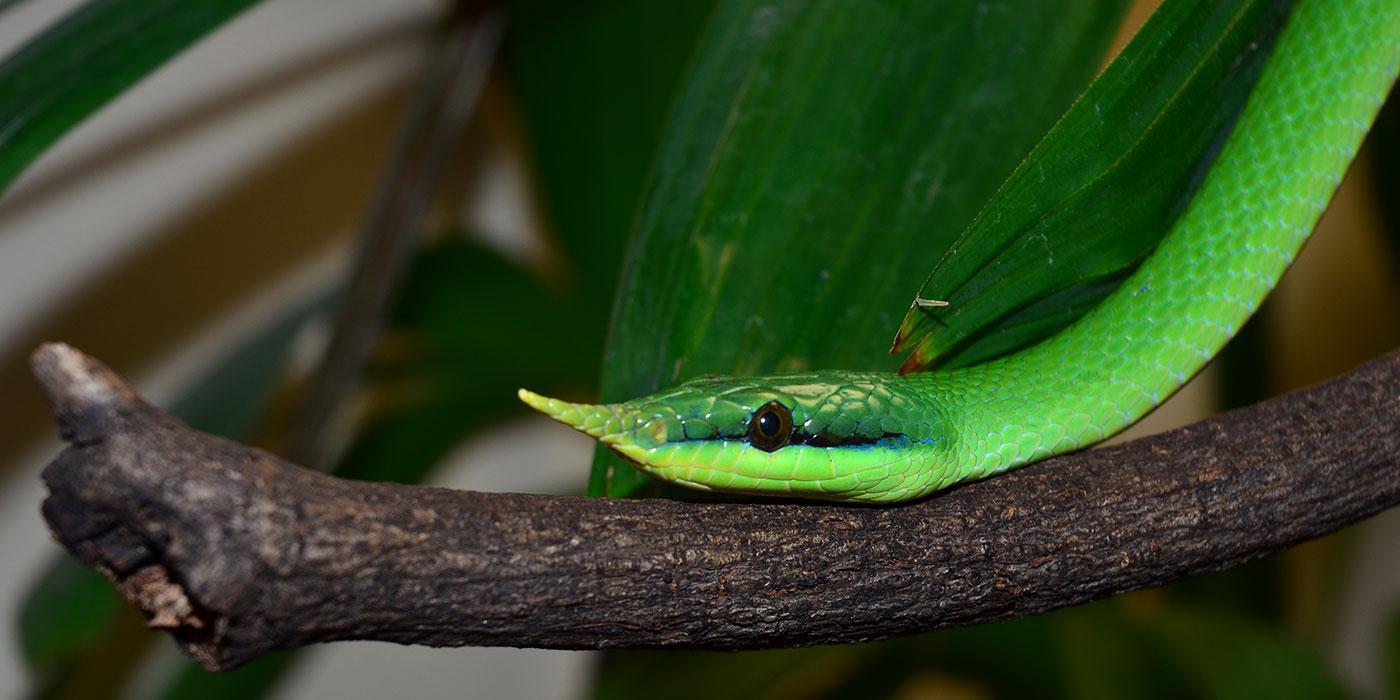
Rhinoceros snakes change color as they age, from brownish gray to steel gray and later, at about 2 years old, to bluish green. Though it is rare, some individuals remain steel gray throughout their lives.
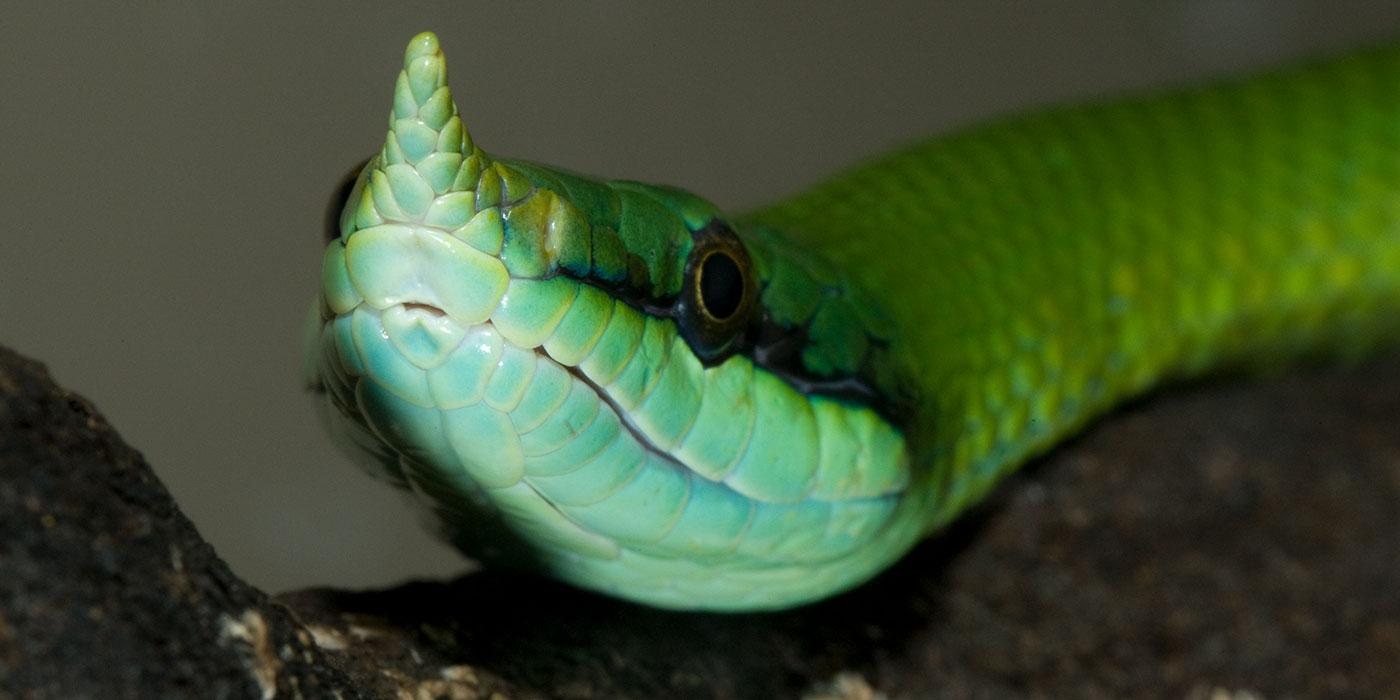
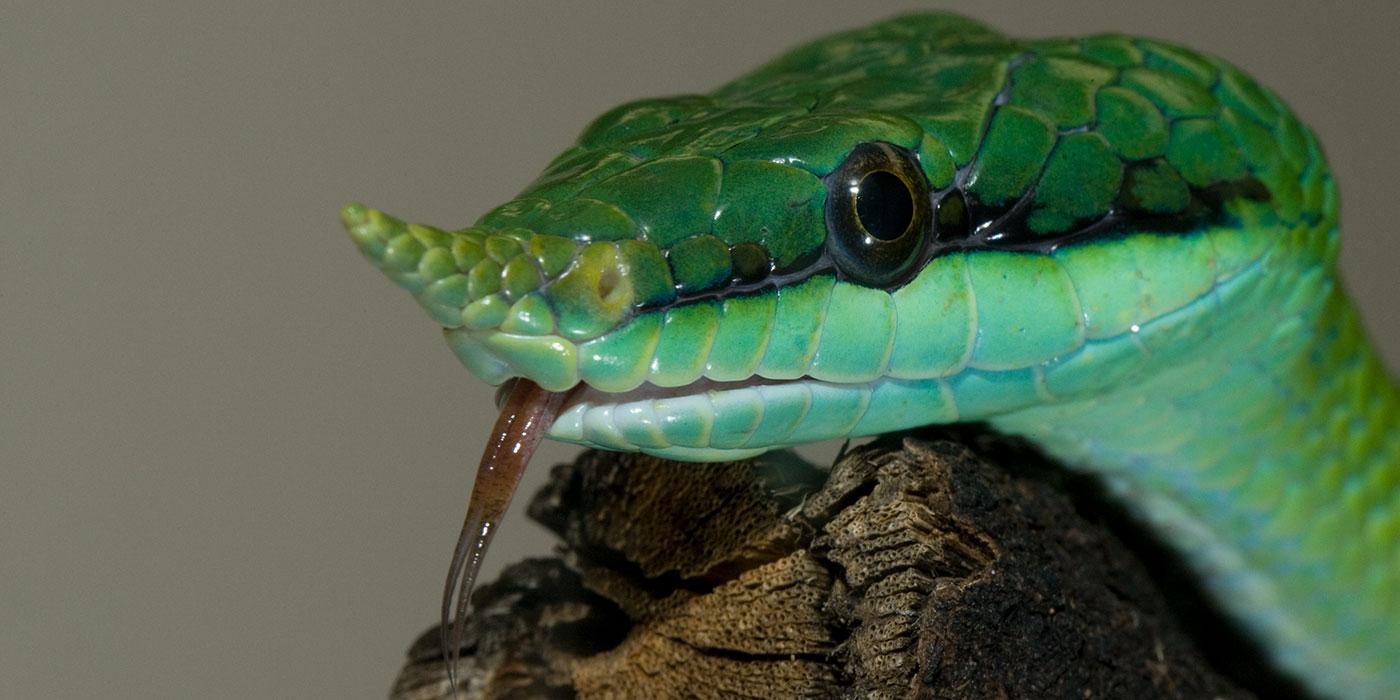
The function of the scaly protuberance on the tip of this snake's snout is unknown.
Size
As an adult, the rhinoceros snake is usually 39-47 inches (100-120 centimeters) long but can reach lengths of 59 inches (150 centimeters). Hatchlings are 12-14 inches (300-350 millimeters) long, and their color is brownish gray with several dorsal scales having dark edges.
Native Habitat
The rhinoceros snake is indigenous to northern Vietnam and southern China. It inhabits subtropical rainforests from elevations of 985-4,920 feet (300-1,500 meters) and has been found near streams and lakes.
Food/Eating Habits
Rhinoceros snakes eat small vertebrates. At the Smithsonian's National Zoo, they are fed mice.
Sleep Habits
This species is arboreal and mainly nocturnal.
Reproduction and Development
These snakes mate between April and May, and a clutch usually contains five to 10 eggs that hatch after about 60 days.
Conservation Efforts
Threats to rhinoceros snakes include habitat degradation and possibly collection for the pet trade. This species is present in many protected areas.
Help this Species
Choose your pets wisely, and do your research before bringing an animal home. Exotic animals don’t always make great pets. Many require special care and live for a long time. Tropical reptiles and small mammals are often traded internationally and may be victims of the illegal pet trade. Never release animals that have been kept as pets into the wild.
If you see a snake in the wild, leave it alone and encourage others to do the same. Don’t assume it is a venomous species, and don’t attack it if it doesn’t pose a threat to your safety. Tell your friends and family about the eco-services that snakes provide, such as keeping rodent populations in check.
Are you a student? Did you love what you learned about this animal? Make it the topic of your next school project, or start a conservation club at your school. You'll learn even more and share the importance of saving species with classmates and teachers, too.
Smithsonian's National Zoo and Conservation Biology Institute. (n.d.). Rhinoceros snake. Retrieved September 13, 2026, from https://www.nationalzoo.si.edu/animals/rhinoceros-snake
Animal News

Happy 5th Birthday, Qing Bao ›
To celebrate giant panda Qing Bao's birthday, keepers went "far out" and created a 1970s-themed fête full of bright colors and iconic pop culture slogans.

See These 5 New Animals at Your Next Visit to the Smithsonian's National Zoo ›
From a spunky new sloth to a dazzling electric eel, get ready to meet the newest residents making themselves at home.

Happy 50th 'Zooniversary' to Chyna and Rulon, the Zoo’s Aldabra Giant Tortoises ›
There are plenty of objects and artifacts at the Smithsonian that are old. But at the National Zoo, there's not much older than Rulon and Chyna.