
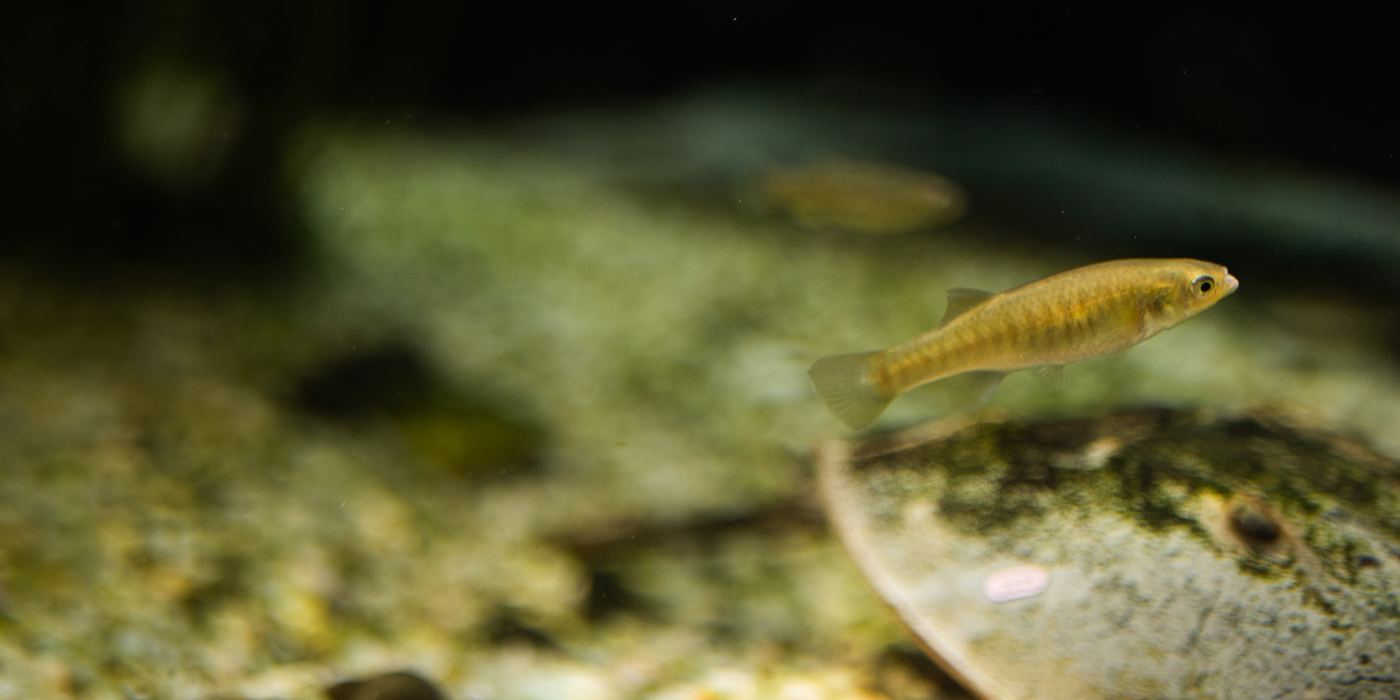
Physical Description
Size
Native Habitat
Native to coastal streams, estuaries and saltwater marshes, these little fish can live in both fresh and salt water – and even move back and forth between the two. They need areas with underwater vegetation. They can also tolerate staggering amounts of pollutants, meaning they do not live only in pristine waterways.
Mummichog can be found along the Atlantic coast of North America, from the Gulf Coast of Texas all the way up to the Gulf of Saint Lawrence in Canada.
Lifespan
Communication
Food/Eating Habits
Sleep Habits
Social Structure
Reproduction and Development
Mummichogs can spawn up to eight times a year. The males’ colors grow more brilliant as breeding season—spring through summer—approaches. They use these bright colors to attract mates. Females display their silvery bellies as a way to signal readiness to spawn. Sometimes, the pair will swim together in tandem before mating.
Female mummichogs lay their eggs out of the water, on floating algae or on a rock or shell, where the male fertilizes them. She can lay up to 460 eggs at once. The eggs need air to develop for the first few weeks. After the next high tide, the water covers them which triggers hatching.
The larva stay in shallow water in the intertidal zone until they are 6 to 8 weeks old. When they are about 0.6 to 0.8 inches (15 to 20 millimeters) long, they swim to slightly deeper water and join schools with adults. They don’t reach their full growth until they are about 2 years old.
Conservation Efforts
Help this Species
Organize or attend a stream, river, lake or other waterway cleanup in your area to preserve aquatic habitats for local species.
Conservation starts with you! Join a citizen science project where you can help collect valuable data for scientists. Encourage your friends and family to get involved too.
Protect local waterways by using fewer pesticides when caring for your garden or lawn. Using fertilizers sparingly, keeping storm drains free of litter and picking up after your pet can also improve watershed health.
Smithsonian's National Zoo and Conservation Biology Institute. (n.d.). Mummichog. Retrieved October 24, 2026, from https://www.nationalzoo.si.edu/animals/mummichog
Animal News

The Smithsonian National Zoo's Cheetah Cub Cam Returns — With Five Adorable Reasons to Tune In ›
Four generations of one cheetah family now live at the Zoo's off-campus research facility. Meet the newest members.

11 Fascinating Facts About North American Porcupines ›
There are plenty of surprises to discover about these prickly creatures.

Watch Meerkats Explore Jack-o'-Lanterns and Cauldrons ›
Seven meerkats got a Halloween-themed surprise from their keepers. See how they dug in.