
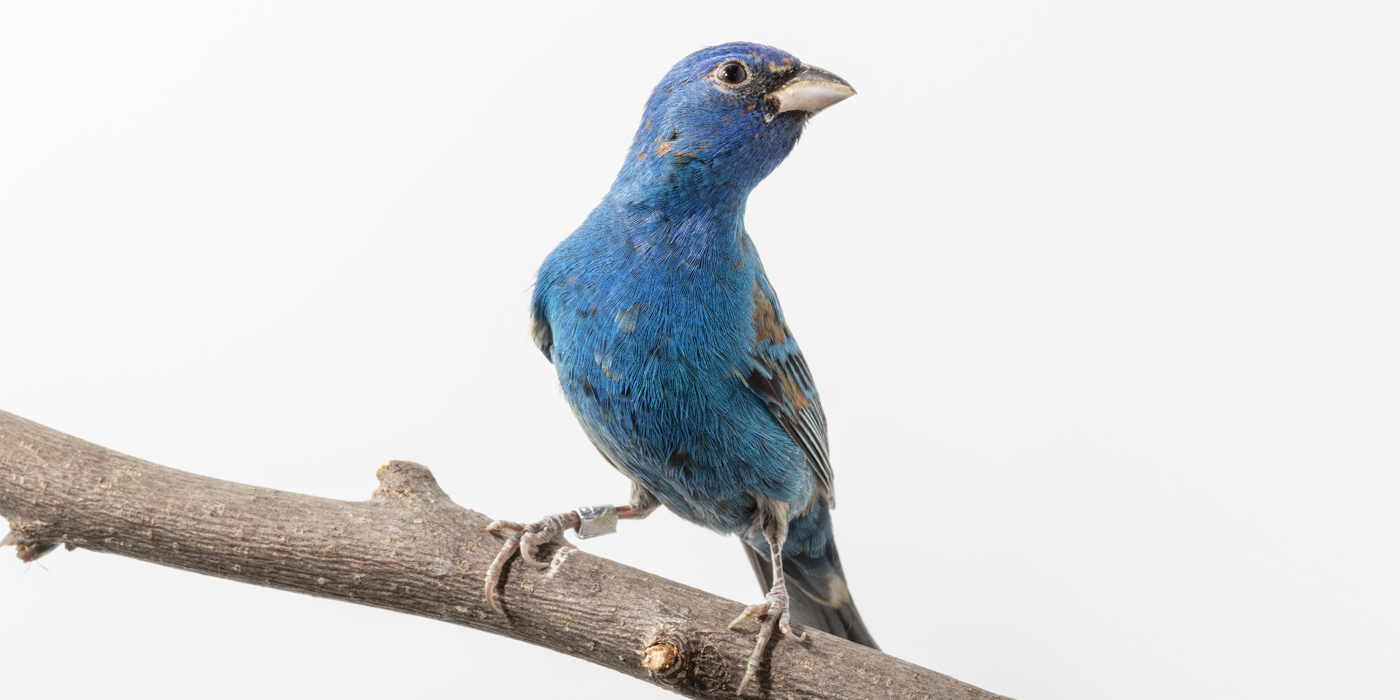
Physical Description
Size
Native Habitat
Indigo buntings live in fields, pastures, rural areas and edges of woodlands.
In the winter, these birds can be found throughout the Caribbean, Central America, and northern South America. In the spring, they migrate northward traveling across the Gulf of Mexico to the Eastern and Midwestern United States as well as southeastern Canada.
Lifespan
Communication
Food/Eating Habits
Sleep Habits
Social Structure
Reproduction and Development
In spring males stake out their territory through song, which they learn from other males and sometimes other species of birds. After pairing up, females build a cup-shaped nest out of plant material in dense shrubs or low trees. Females lay a clutch of one to four white to bluish-white eggs, which they incubate for about two weeks.
Care for the nestlings is mostly done by females, although sometimes the male will take over feeding duties when the young are ready to fledge, or if the female moves on to start another nest. Nourished by a steady diet of insects caught by their parents, most young indigo buntings are ready to leave the nest nine to twelve days after hatching.
Conservation Efforts
Help this Species
Be a smart consumer. Choose products made with sustainable ingredients, such as Smithsonian certified Bird Friendly coffees, which support farmers striving to limit their impact on wildlife and habitat.
Choose your pets wisely, and do your research before bringing an animal home. Exotic animals don’t always make great pets. Many require special care and live for a long time. Tropical reptiles and small mammals are often traded internationally and may be victims of the illegal pet trade. Never release animals that have been kept as pets into the wild.
Plant native flowers in your garden to help feed resident and migrating pollinators. You'll make your lawn beautiful and help wildlife at the same time!
Smithsonian's National Zoo and Conservation Biology Institute. (n.d.). Indigo bunting. Retrieved September 10, 2026, from https://www.nationalzoo.si.edu/animals/indigo-bunting
Animal News

Happy 50th 'Zooniversary' to Chyna and Rulon, the Zoo’s Aldabra Giant Tortoises ›
There are plenty of objects and artifacts at the Smithsonian that are old. But at the National Zoo, there's not much older than Rulon and Chyna.

8 Reasons Why Zoo Staff Think the Chacoan Peccary Might Be Your New Favorite Animal ›
Two animal care experts share why this new species might become your next obsession.

Look Back At Linh Mai’s Most Memorable Moments As She Turns 7 Months Old ›
Seven months ago, the world fell in love with a little Asian elephant named Linh Mai. As she turns 7 months old, we're taking a look back at her most memorable moments.