
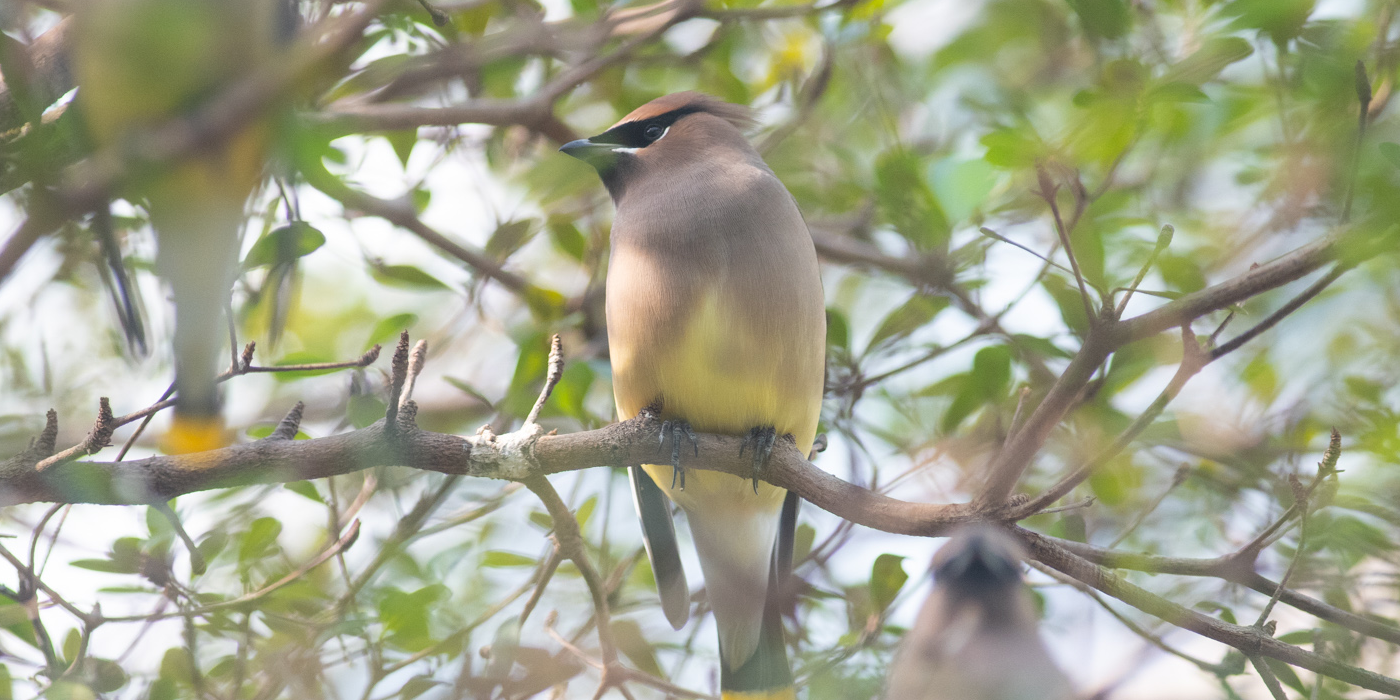

Physical Description
Size
Native Habitat
Lifespan
Communication
Food/Eating Habits
Sleep Habits
Social Structure
Reproduction and Development
Unlike many migratory birds that begin to build nests soon after they reach their breeding grounds, cedar waxwings time their reproductive cycle based on when summer-ripening fruits are most plentiful.
When males and females are ready to breed, they will perform courtship displays, in which the male hops around and dances in front of the female. Both birds will pass small objects back and forth to each other, like berries or flower petals.
Nests are mainly built by the female and are constructed by weaving twigs, grasses and soft materials like animal hair into a cup shape. Nests are typically placed in the fork of a horizontal branch and take five to six days to complete.
Females lay between two and six eggs, which are pale blue or bluish gray, and incubates them for 11 to 13 days. After the nestlings hatch, both parents help with feeding and care, until they are ready to leave the next after 14-18 days. Cedar waxwing pairs can have one to two broods per season.
Conservation Efforts
Help this Species
Be a smart consumer. Choose products made with sustainable ingredients, such as Smithsonian certified Bird Friendly coffees, which support farmers striving to limit their impact on wildlife and habitat.
Conservation starts with you! Join a citizen science project where you can help collect valuable data for scientists. Encourage your friends and family to get involved too.
Plant native flowers in your garden to help feed resident and migrating pollinators. You'll make your lawn beautiful and help wildlife at the same time!
Share the story of this animal with others. Simply increasing awareness and educating others about the threats invasive species pose to local ecosystems can help protect native environments.
Smithsonian's National Zoo and Conservation Biology Institute. (n.d.). Cedar waxwing. Retrieved September 6, 2026, from https://www.nationalzoo.si.edu/animals/cedar-waxwing
Animal News

8 Reasons Why Zoo Staff Think the Chacoan Peccary Might Be Your New Favorite Animal ›
Two animal care experts share why this new species might become your next obsession.

Look Back At Linh Mai’s Most Memorable Moments As She Turns 7 Months Old ›
Seven months ago, the world fell in love with a little Asian elephant named Linh Mai. As she turns 7 months old, we're taking a look back at her most memorable moments.

Three Adorable Red Panda Cubs Born This Summer at the Zoo’s Front Royal Campus ›
“The cubs are really just balls of fur that eat and sleep right now,” said Jessica Kordell, assistant curator of carnivores.