
These non-venomous snakes are native to Australia's northern regions. Because they are mainly active at night and spend much of their time in burrows, they are rarely seen by humans.
Physical Description
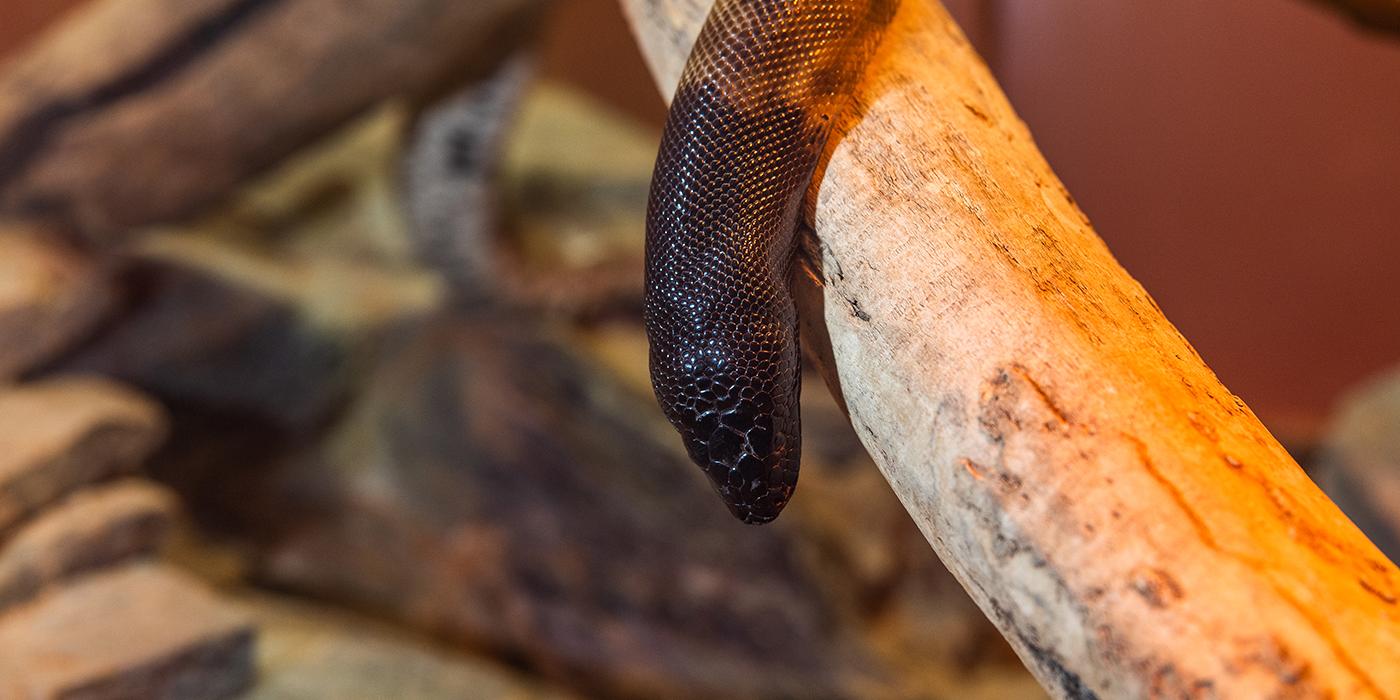
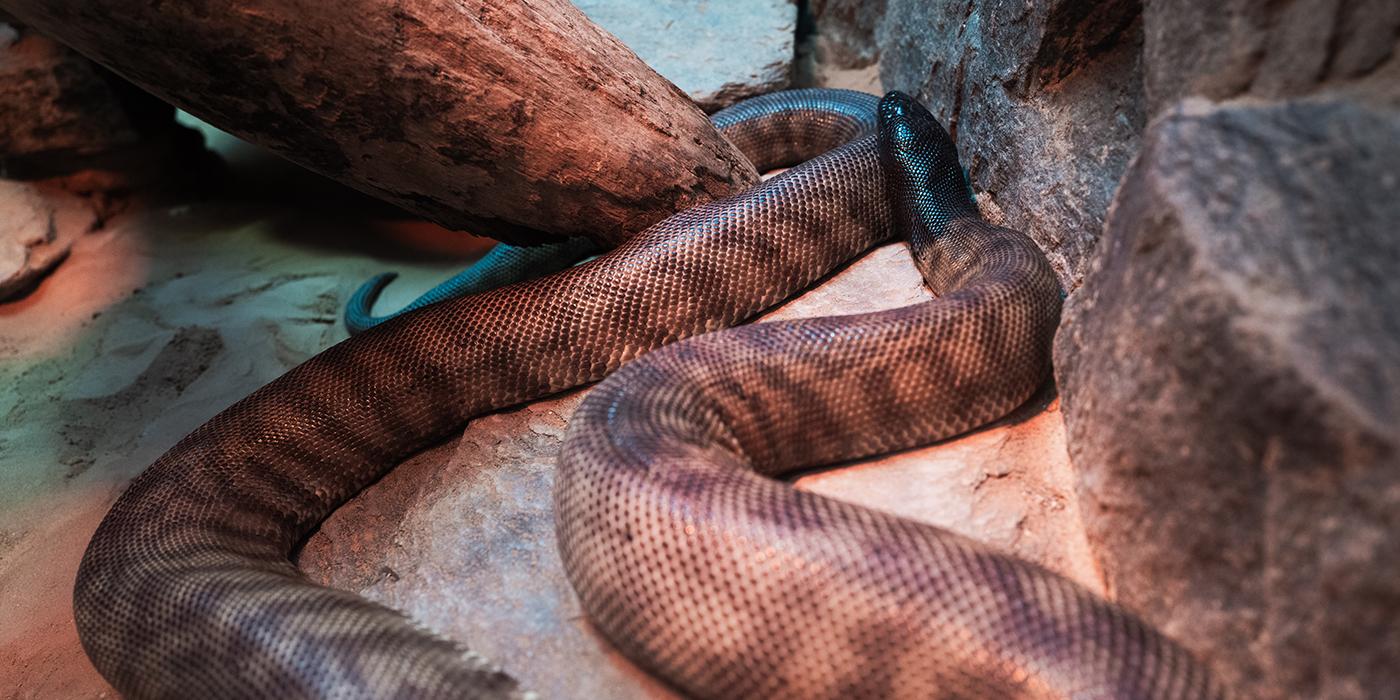
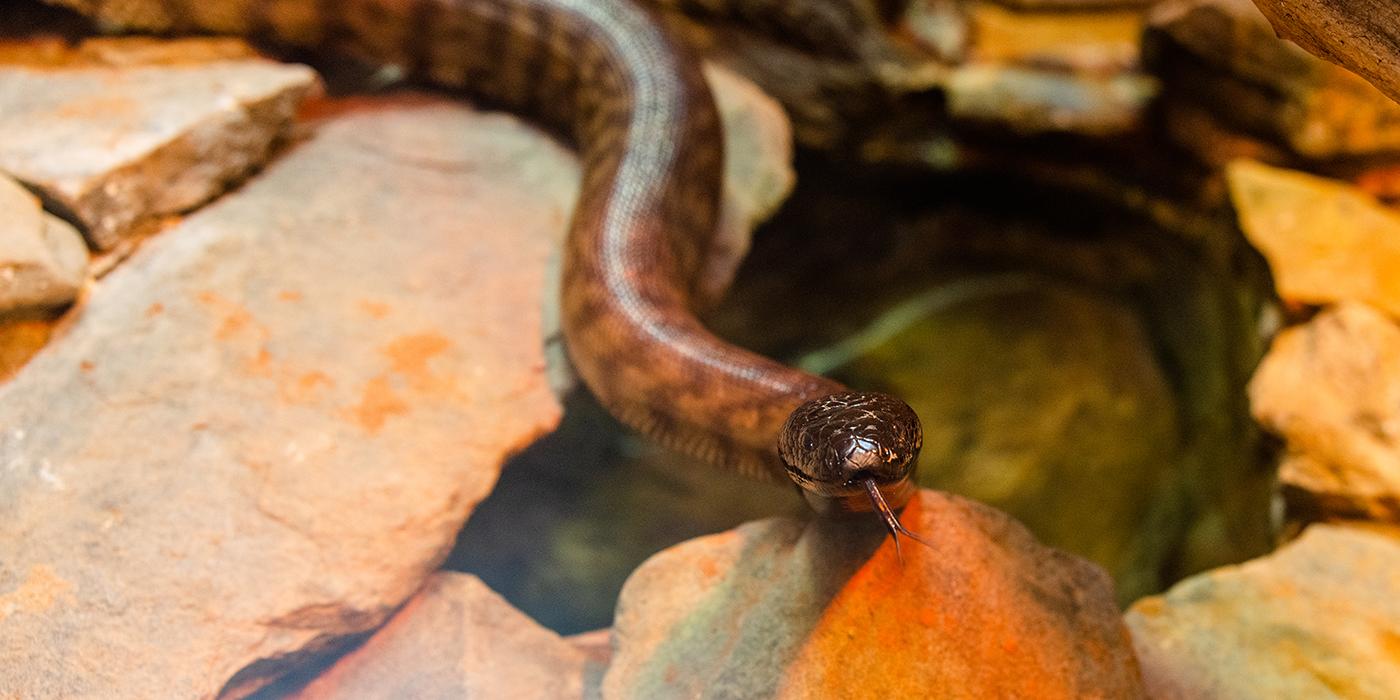
The black-headed python is a nocturnal snake with a slender body and a black, shortened head. Aside from the dark head, the body varies in color from tan to yellow to reddish, with irregular brownish-black stripes that lines the body dorsally. This coloration varies based on the region the snakes are found.
They get their name from the characteristic black coloration that covers their head and extends a short way down their neck. The Nyangumarta peoples of the Pilbara region of Australia call this snake the “purruyura”.
Size
They average between 5-6 feet (1.5-2 meters) in length, though they may reach up to 8 feet (2.5 meters), and can weigh about 35 pounds (16 kilograms).
Native Habitat
Black-headed pythons are found in northern Australia, primary in semi-dry savanna and scrub habitats, though they may also be found in forests or farmlands.
This species has some unique strategies for regulating its body heat in the hot, dry conditions where it is found. Other snakes will stretch out to bask. However, doing this would expose this snake to predators, which include dingoes, raptors, and humans. To remain obscured while basking, the snake will burrow into the ground and only poke out its head. The dark coloration allows for it to absorb heat quickly to heat its brain and sensory organs. On the flip side, it may bury its head in the sand if it needs to cool down.
These snakes are primary a fossorial species, meaning they live in abandoned or self-dug burrows, which helps maintain a steady body temperature. When the snakes leave their burrows, other burrowing species will move in. By creating habitat, the black-headed pythons are fulfilling an important function in the ecosystem.
Lifespan
This species lives between 20 and 30 years.
Food/Eating Habits
The natural diet of the black-headed python consists mainly of other reptiles, including skinks, geckos, bearded dragons, and other lizards, and occasionally small mammals or birds. They may also consume small snakes.
Black-headed pythons are known to be a less aggressive species of python, most often hissing and striking with a closed mouth when disturbed.
They are non-venomous snakes, but interestingly are immune to the venom of other Australian snakes. This allows them to prey on some of the most venomous snakes in the world. Like other pythons, black-headed pythons use constriction to subdue their prey, wrapping their bodies around their prey until suffocation, and then swallowing the animal whole.
Reproduction and Development
Black-headed pythons are seasonally monogamous. Female black-headed pythons lay clutches of between 8 to 18 eggs, usually in October or November. The female protects and warms the eggs for about 2 months by curling around them and shivering her body to raise the temperature of the eggs. Young pythons are independent at birth and reach sexual maturity around 4 to 5 years after hatching.
Conservation Efforts
This species has not been evaluated by the IUCN. However, another species in this genus, the Woma python, has become critically endangered in some regions.
Help this Species
Be a smart consumer! Avoid animal-skin products, even those marked “faux,” to ensure you’re not contributing to the illegal hunting of this species.
Practice ecotourism by being an advocate for the environment when you’re on vacation. During your travels, support, visit or volunteer with organizations that protect wildlife. Shop smart too! Avoid buying products made from animals, which could support poaching and the illegal wildlife trade.
Choose your pets wisely, and do your research before bringing an animal home. Exotic animals don’t always make great pets. Many require special care and live for a long time. Tropical reptiles and small mammals are often traded internationally and may be victims of the illegal pet trade. Never release animals that have been kept as pets into the wild.
Support organizations like the Smithsonian’s National Zoo and Conservation Biology Institute that research better ways to protect and care for this animal and other endangered species. Consider donating your time, money or goods.
Share the story of this animal with others. Simply raising awareness about this species can contribute to its overall protection.
Are you a student? Did you love what you learned about this animal? Make it the topic of your next school project, or start a conservation club at your school. You'll learn even more and share the importance of saving species with classmates and teachers, too.
Smithsonian's National Zoo and Conservation Biology Institute. (n.d.). Black-headed python. Retrieved September 21, 2026, from https://www.nationalzoo.si.edu/animals/black-headed-python
Animal News

Happy 5th Birthday, Qing Bao ›
To celebrate giant panda Qing Bao's birthday, keepers went "far out" and created a 1970s-themed fête full of bright colors and iconic pop culture slogans.

See These 5 New Animals at Your Next Visit to the Smithsonian's National Zoo ›
From a spunky new sloth to a dazzling electric eel, get ready to meet the newest residents making themselves at home.

Happy 50th 'Zooniversary' to Chyna and Rulon, the Zoo’s Aldabra Giant Tortoises ›
There are plenty of objects and artifacts at the Smithsonian that are old. But at the National Zoo, there's not much older than Rulon and Chyna.